


Today’s workspaces change shape and pace, because people and the way they work change. With Selection Design, this transformation is told as a landscape comprised of different “souls” with a shared breath: elegance and freedom that coexist, to adapt to real circumstances and needs.
Within these contemporary geographies, tradition and innovation are not alternatives: they come together. Materials and craftsmanship intertwine with modularity, sustainability and flexibility, to build environments able to accommodate different occasions — concentration, discussions, breaks — without losing coherence. Each seat and each element contribute to creating a space that supports work with dynamism, interpreting daily use and duration over time as part of the project.
In this article, we will discuss:
Executive Office: timeless elegance
Entering an Executive Office is like crossing the threshold of a place beyond time, where every detail communicates authority and prestige. Nothing is left to chance: the furnishings, proportions and gestures write a language of style that speaks of identity. In this scenario, tradition does not stand still: it is renewed and becomes a tale of authenticity, able to interpret the present without losing its coherence.
With Selection Design, the Executive Office is the point at which the project must hold together two apparently distant needs: representativeness and actual comfort. It is a space in which quality is immediately perceived, but must continue over time, during work hours, meetings and moments of concentration. It is here that design becomes the yardstick: simple, precise, built to last.
Made in Italy and Craftsmanship: culture as a project
The managerial dimension is not just a matter of style: it is the culture of a project comprised of consistency, control and care. Made in Italy is authentic knowledge that comes from expert hands and a manufacturing tradition: Diemme handles every phase, from design to construction, to ensure quality and attention to detail.
Today, this craftsmanship is a modern skill: it can be seen in tailored seams, high-quality materials and precision workmanship that render each seat unique and long-lasting. It is a balance that, in the context of the Executive Office, becomes fundamental: form and function, comfort and representativeness, beauty as a harmony of proportions, material and action. In Selection Design, this is the meaning of Made in Italy: an authentic language, forged from passion, continuous evolution and attention to detail.
JAZZ: contemporary elegance, sartorial care
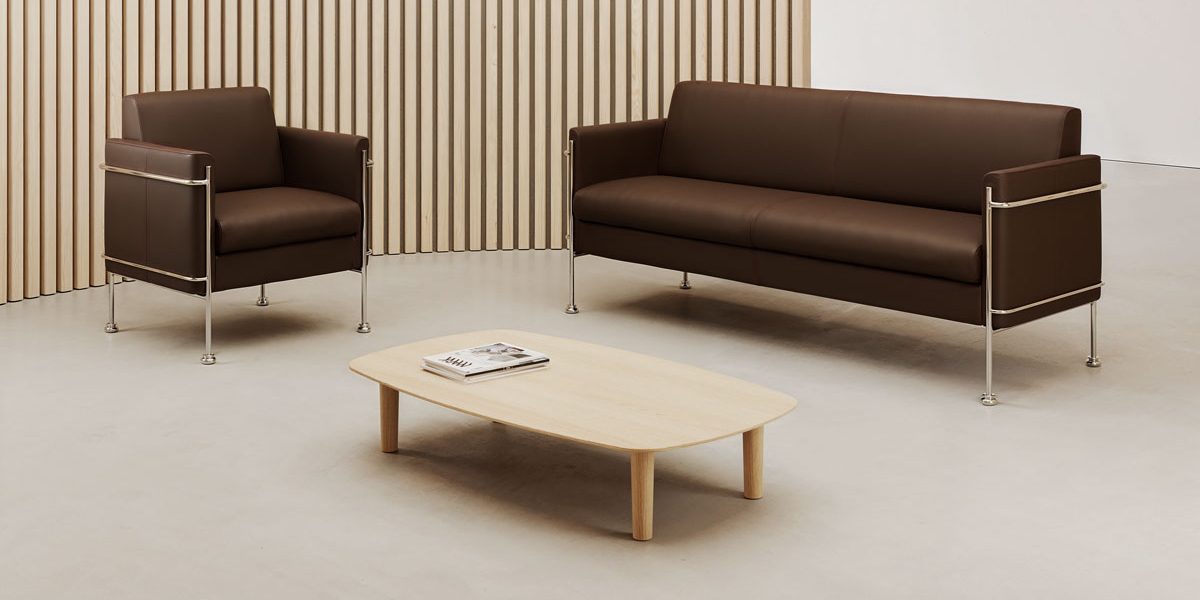
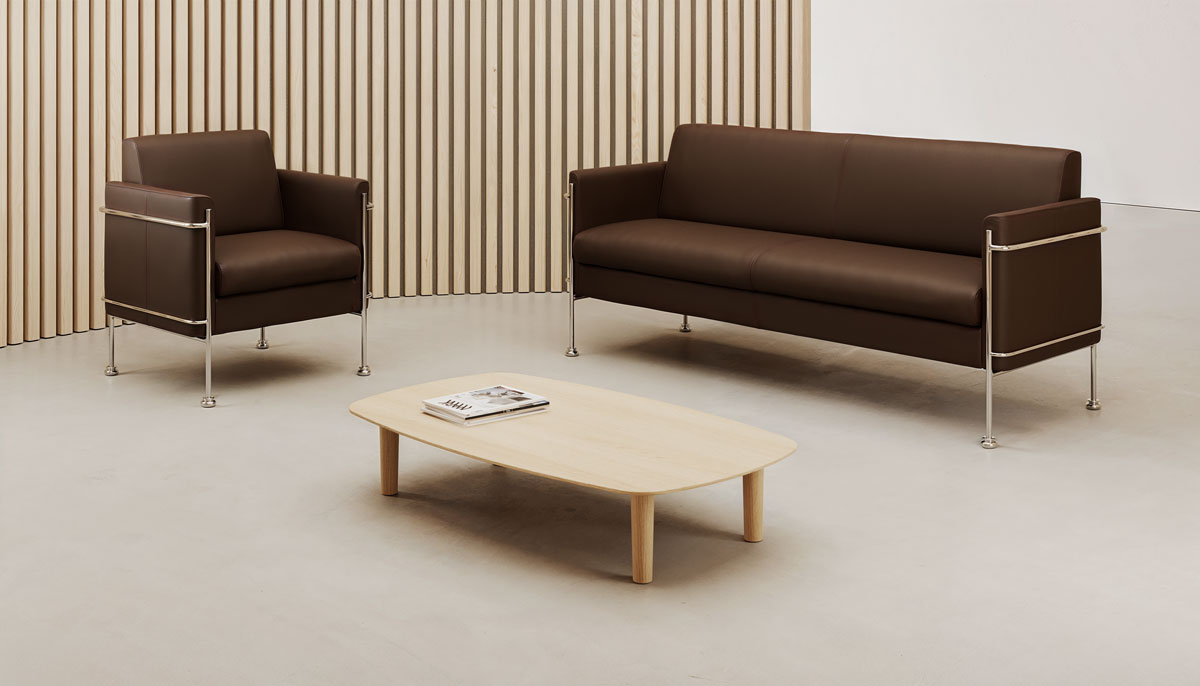
In the language of the Executive Office, elegance is not an exercise in style: it is a measure of design made up of proportions, materials and details. This setting includes JAZZ, an armchair and a sofa made with sartorial care and attention to detail, which reinterpret elegance in a contemporary manner.
The harmonious lines recall a classic and timeless taste, while the essential shape and design quality make JAZZ a timeless presence, able to bring comfort and refinement to directional and representative environments.
MUSA: Made in Italy as the culture of a project
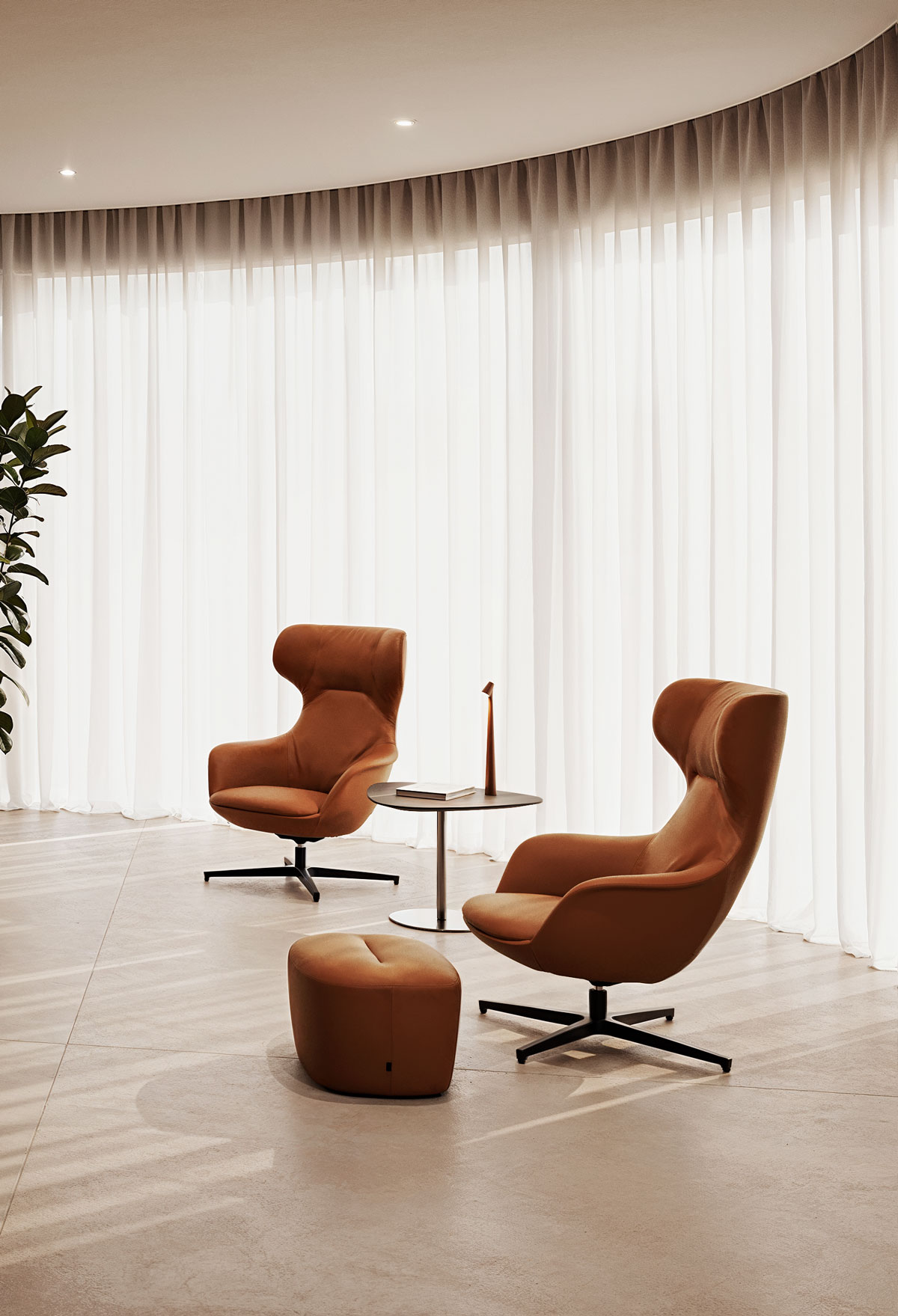
MUSA reinforces the sense of Made in Italy as the culture of a project: a know-how that lives in the care, in overseeing each step and in the perceptible quality of the materials. A balance between form and function, comfort and representativeness, with modern craftsmanship visible in the workmanship and details that make each piece durable.
An “Italianness” not as a mere label, but as a design method that supports the identity of space over time.
ACE: ergonomics and versatility for dynamic workstations
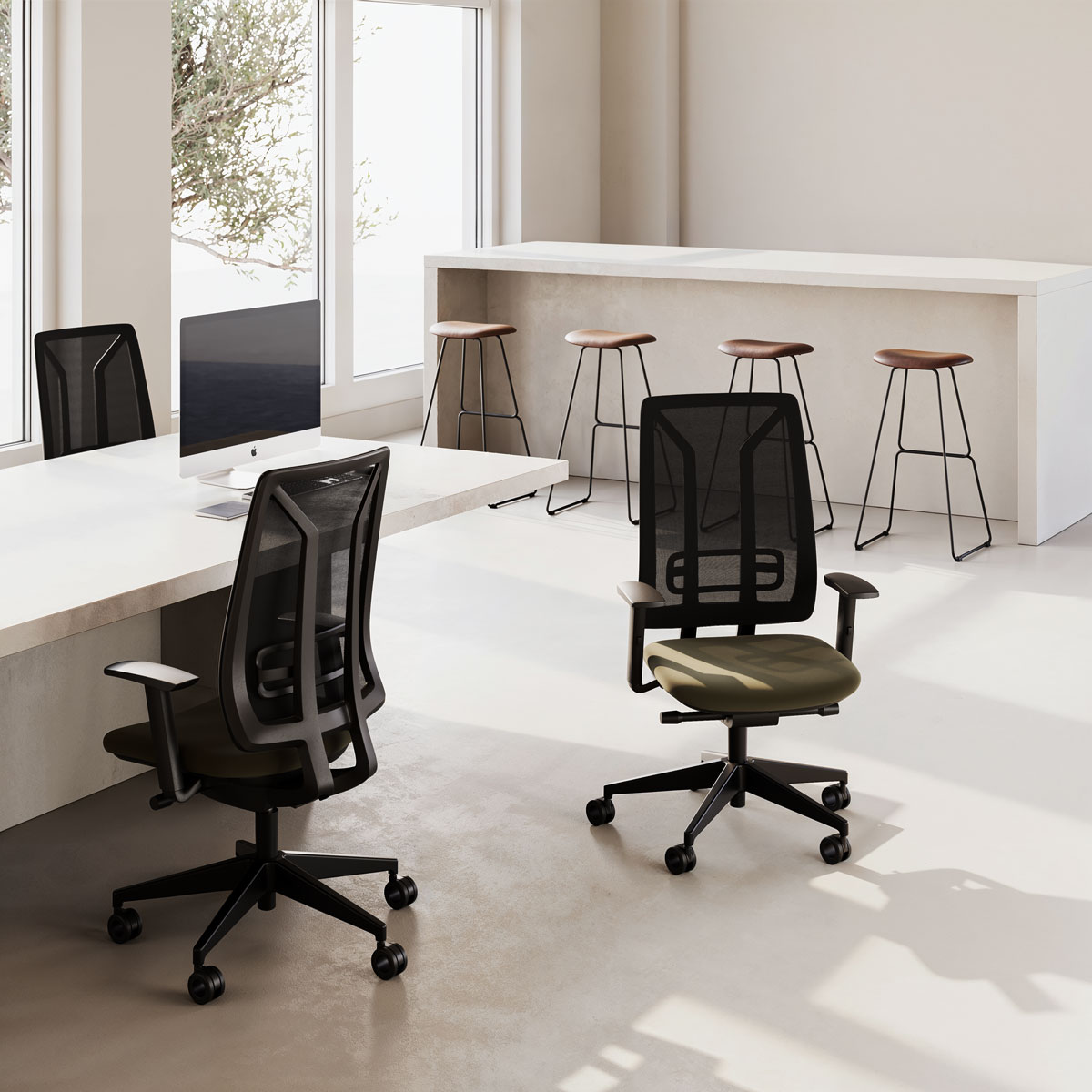
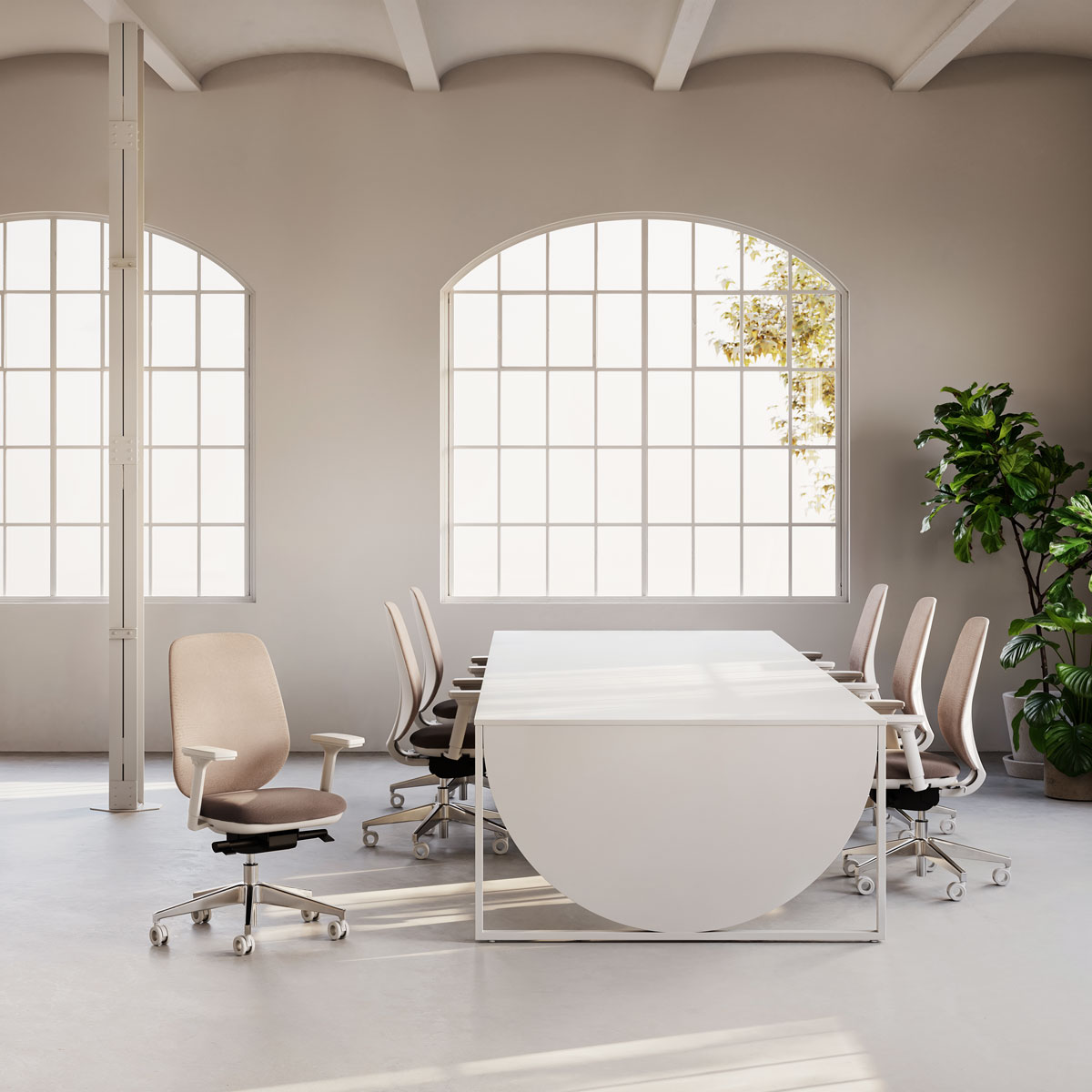
In a contemporary office, especially when the workstations often change users, ergonomics must have an immediate effect and be easily adjustable. ACE arose from this logic: a work chair designed to accompany fluid movements and offer comfort immediately, without transforming adjustment into something complex.
The Syncron sliding mechanism means a more customisable set-up, while the adjustable lumbar support, with optional headrest, helps maintain continuity of comfort even after prolonged use. Precisely because it is designed for dynamic contexts, ACE is also suitable for temporary workstations and frequent user changes, thanks to adjustable or removable armrests.
OPEN SPACE: working without borders
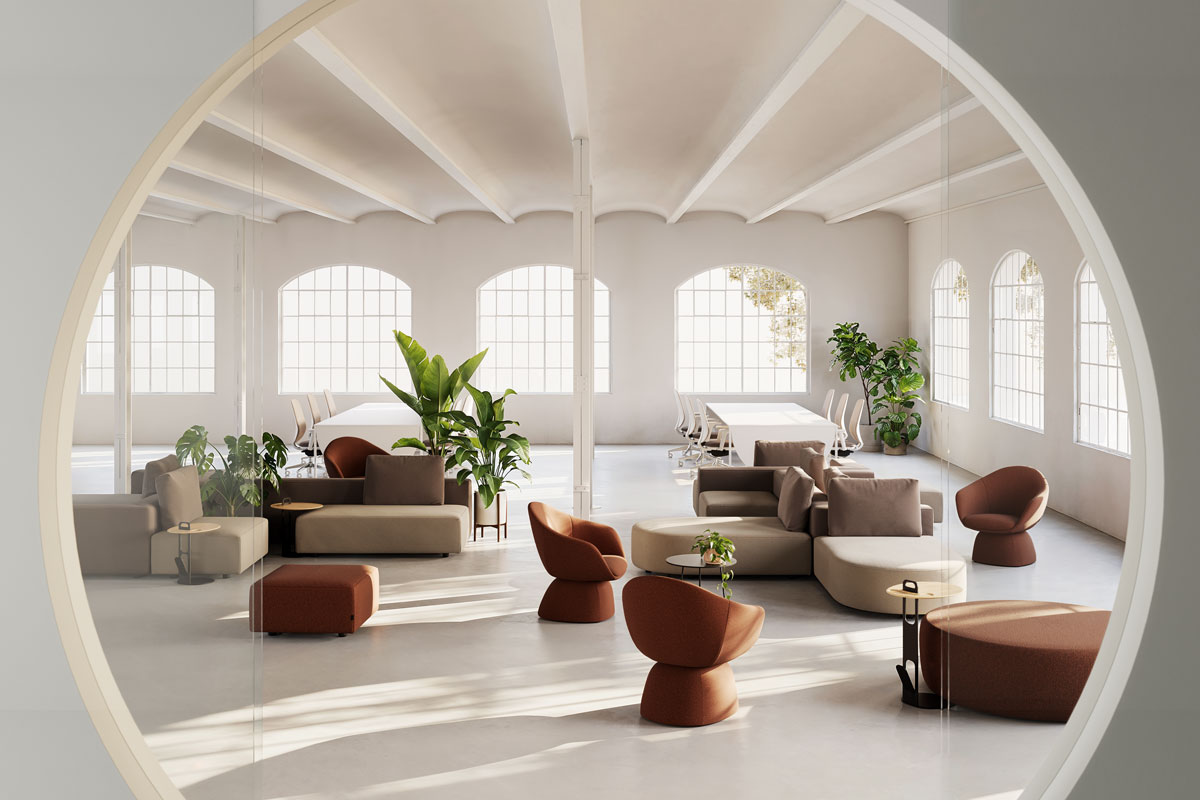
The contemporary office is a fluid space that should adapt to people and their needs. If Open Space fosters connections and dialogue, design must accompany movement, discussions and the freedom to choose how and where to work. Such environments must remain harmonious precisely because they are used differently throughout the day: for concentration, collaboration and breaks that all coexist.
Here, each piece has a specific task: not to “fill”, but to build balance. This means supporting work without stiffening use, defining zones and rhythms without imposing boundaries, maintaining aesthetic continuity even when the space changes during the day. It is in this guided freedom that Open Space becomes truly contemporary: dynamic, welcoming, designed to invite different people, occasions and needs.
WELL-COME: update, repair, recycle
Sustainability is not a keyword separate from the project, but a criterion that affects the project’s duration, maintenance and possibility of evolution over time. In Selection Design, this theme is expressed in a very concrete way: to create durable products, but also products that are easy to update, repair or recycle, favouring reuse and lower consumption.
WELL-COME interprets this vision through a precise technical approach: non-destructive disassembly. Rigid polyurethane components are 100% reusable, while flexible polyurethane parts and upholstery are easily replaceable. This way of designing shifts attention from the “end of life” to the real life of the product: how it remains functional over time, how it is updated, how it remains consistent and usable for longer.
SQUARE: creative modularity, ever new configurations
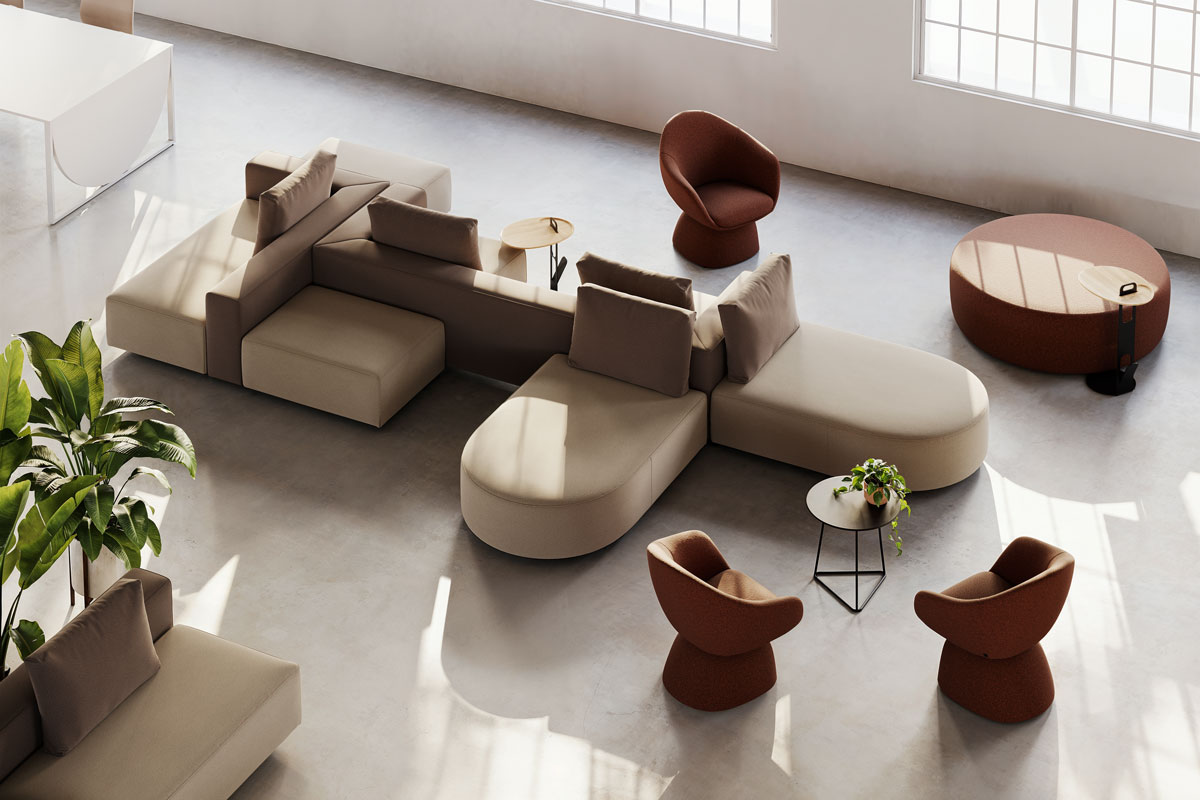
In an Open Space, modularity is not only used to make compositions. It serves to allow different activities to coexist in the same environment, maintaining visual order and freedom of use. SQUARE is a system that combines formal simplicity and design freedom: a streamlined geometry that generates different configurations, adapting to different spaces and functions.
The interesting point is both constructive and practical. The seats are separated from the backrests, so they can be easily moved and reconfigured, creating new compositions without having to rethink the entire layout. To this is added the possibility of freely combining fabrics and colours between the backrest and the seat: a level of design that is not only aesthetic, but also helps to define zones, rhythms and identities within a shared space.
SKIN: disassembly and ergonomics for contemporary Open Spaces
In Open Spaces, the operating chair is a daily and intensive object. It must support the body, but also meet criteria of responsibility and end-of-life. SKIN is the synthesis of these two plans: aesthetics, ergonomics and sustainability in one solution designed for the shared environment.
From the point of view of materials, the structure uses regenerated plastic components and minimises non-recyclable components, facilitating disassembly and recycling. On the ergonomic front, the lightweight lines of the backrest integrate a lumbar support with 3D movement, adjustable in height through easily accessible levers. This design detail aims to guarantee freedom of movement and ergonomic comfort in any position, even in dynamic contexts.
Download Selection Design
To delve into the six chapters and the cross-cutting focuses, download Selection Design, Diemme’s editorial publication dedicated to contemporary spaces and the ways in which they are lived, designed and transformed today.
FAQs on how to design the contemporary office
How do you design a contemporary office between the Executive Office and Open Space?
A contemporary office is designed by relating identity, comfort and flexibility of use. The Executive Office works on authority and dimensions, while the Open Space requires fluid areas that accompany movement, discussions and freedom of choice, maintaining overall harmony.
What is the difference between Executive Office and Open Space?
The difference between Executive Office and Open Space is above all in the role of the space itself. The Executive Office communicates authority and identity through details and proportions, while the Open Space privileges connections and dialogue and must support focus, collaboration and taking breaks in the same environment.
Why is ergonomics central to workstations?
Ergonomics is central because it supports wellbeing and performance over time. In Selection Design, we attach great importance to the presence of seating that can guarantee immediate comfort and accessible adjustments, especially in dynamic contexts with frequent user changes and prolonged use.
What does “modularity” mean in an Open Space?
In an Open Space, modularity means being able to reconfigure the space while maintaining coherence and legibility. In the book, modularity is associated with systems that generate different configurations and adapt to various functions and rhythms, without transforming the space into something temporary.
Why is sustainability a criterion for workspace projects?
Sustainability is a criterion for workspace projects because it affects durability, maintenance and the possibility of evolution over time. In the chapter “Geographies of Work”, it is described as the ability to reduce impact without sacrificing aesthetics and quality, favouring reuse and lower consumption.
What does “disassembly” mean for an office chair?
For an office chair, disassembly means being designed to be disassembled and managed more responsibly at end-of-life. In the book, the theme is related to the reduction of non-recyclable elements and the choice of components that facilitate recycling and reclamation, without foregoing quality of use.
What does Made in Italy mean as a “culture of a project” in a managerial environment?
Made in Italy as a culture of a project means monitoring each phase, attention to detail and perceptible quality over time. In the book, this is described as a balance between form and function, comfort and representativeness, with modern craftsmanship visible in processes, materials and finishes designed to last.
Does Selection Design replace a product catalogue?
Selection Design does not replace the product catalogue. Selection Design is an editorial publication that reads space in terms of scenarios and connects contexts, materials and design criteria, helping to orient architects and designers in the choices that define the experience and duration of environments.
How can I download Selection Design by Diemme?
You can download Selection Design by Diemme from the dedicated download page on the website. The book consists of six chapters and cross-cutting focuses to read contemporary spaces and support choices in terms of comfort, functionality, modularity, sustainability and duration over time.