


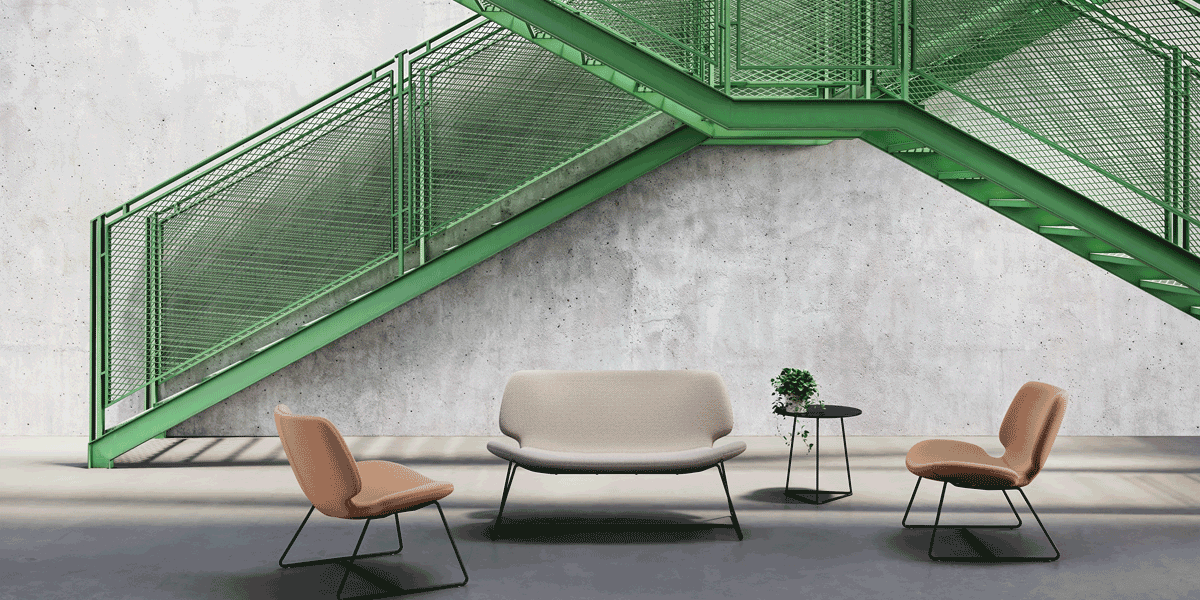
Co-working spaces are not fixed environments designed for a single function. They are constantly evolving places where work, collaboration and creativity intertwine throughout the day. Each area must be able to support different rhythms: individual focus, informal exchange, breaks, discussion and the need for privacy.
In this episode of Selection Design, the editorial book by Diemme dedicated to contemporary spaces, we explore Metamorphosis of Spaces: hybrid and reconfigurable environments in which design helps create a balance between autonomy and interaction, flexibility and comfort.
In this article, you will discover more about:
- Co-working and hybrid spaces, where operational work, collaboration, creativity, breaks and concentration coexist within the same environment.
- Eon Lounge, the solution for shaping the relaxation area and turning breaks into moments of regeneration within operational spaces.
- Reconfigurable furniture, tools for modifying the space throughout the day without compromising order, clarity or design consistency.
- Snake, the system capable of shaping fluid environments, creating a balance between autonomy, collaboration, privacy and acoustic comfort.
- Kire with castors, the chair that moves with the environment and supports dynamic layouts, workgroups and changing activities.
- In summary: 3 design criteria for co-working spaces
- Selection Design: a series of in-depth explorations
- Download Selection Design
- Frequently asked questions about the metamorphosis of spaces
Co-working: hybrid spaces where flows meet
Co-working is not simply a shared space. It is an environment made up of different rhythms, where operational work, collaboration, creativity and breaks alternate throughout the day. People enter, move around, meet, seek concentration or interaction: this is why every element must contribute to a dynamic, lively and legible flow.
In this scenario, the design must be able to bring together apparently opposite needs. On the one hand, workstations are needed to support individual focus; on the other, more open and informal areas are required where dialogue can emerge naturally. Between these two poles are break areas, which are becoming increasingly important for slowing the pace, restoring attention and making the environment more welcoming.
The quality of a co-working space is measured precisely by this ability: not by creating isolated areas, but by building a fluid system in which each area retains a clear function while, at the same time, interacting with the others.
Eon Lounge: the relaxation area as part of the design
Every operational area needs a space where the pace can slow down. In co-working, a break is not a secondary moment: it is part of the work experience because it allows people to recover energy, change posture, engage in more informal conversations or simply create distance from the operational flow.
EON LOUNGE addresses this need with a generous and comfortable lounge chair, designed to transform breaks into moments of regeneration. Its welcoming forms help create dedicated relaxation areas without separating them from the rest of the environment: the result is a more complete space, capable of alternating activity and well-being.
In a co-working environment, a well-designed relaxation area does not simply serve to “fill” an empty space. It makes the environment more human, more balanced and better suited to the different ways in which people experience their working day.
Reconfigurable furniture: when the space moves with people
In co-working environments, space cannot be conceived as a fixed structure. During the same day, it may host very different activities: individual work, informal meetings, discussions, breaks, phone calls, presentations or small temporary groups. Furniture must therefore be able to follow these changes without making the environment feel confusing or provisional.
Reconfigurability thus becomes a design quality. It does not simply mean moving elements around, but creating a system capable of adapting while maintaining order, comfort and identity. Tables, seating, panels and modules must interact with one another, allowing more open or more intimate areas to be created according to need.
In Selection Design, this idea takes shape through solutions that accompany the natural movement of people. The space transforms, yet remains legible: each configuration supports a specific use and contributes to making co-working more flexible, welcoming and functional.
Snake: reconfigurability, autonomy and collaboration
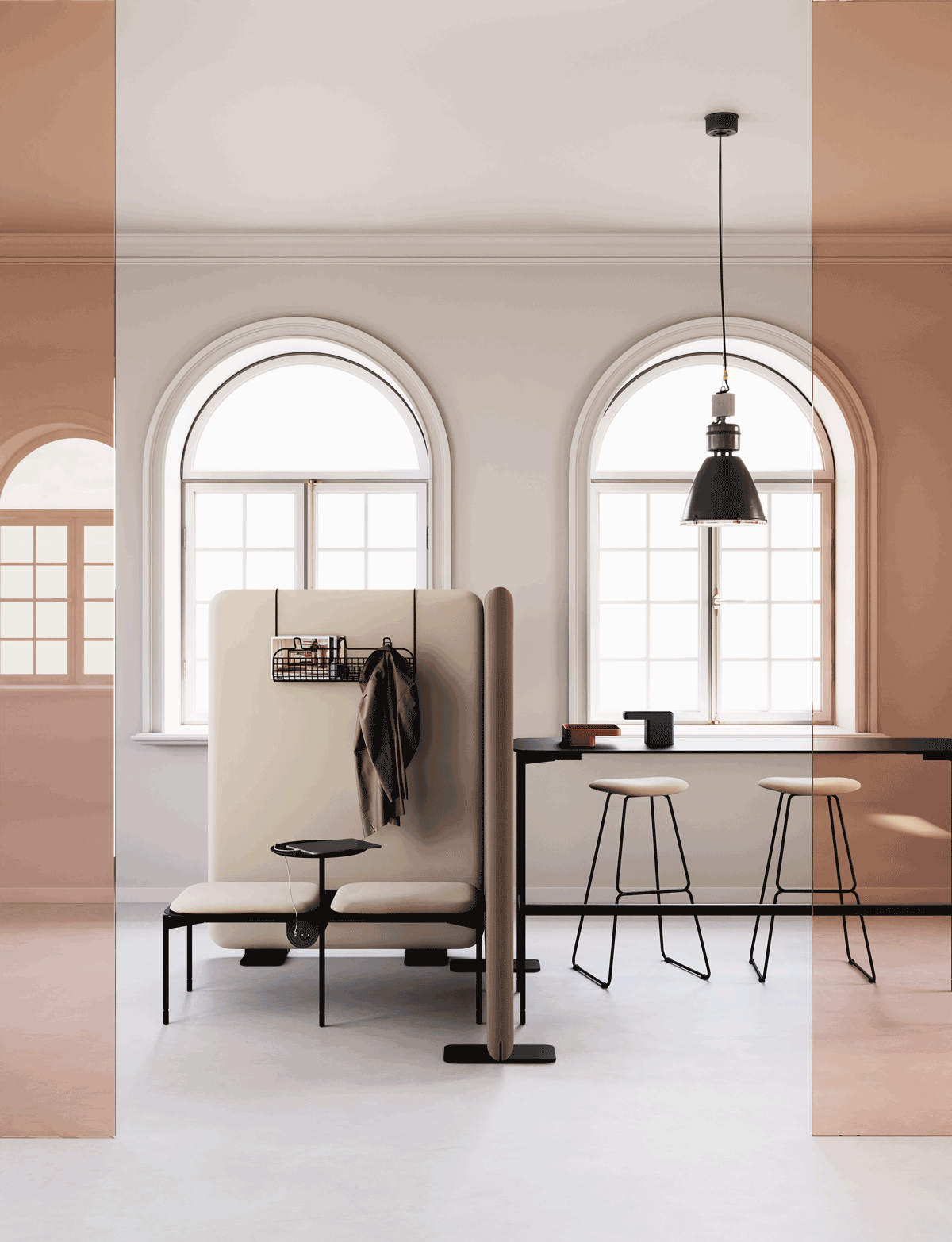
SNAKE is furniture in motion by definition: each module contributes to shaping the space, creating a balance between autonomy and collaboration. In a co-working environment, this ability is central because it makes it possible to create fluid environments in which people can choose how to work, meet or concentrate.
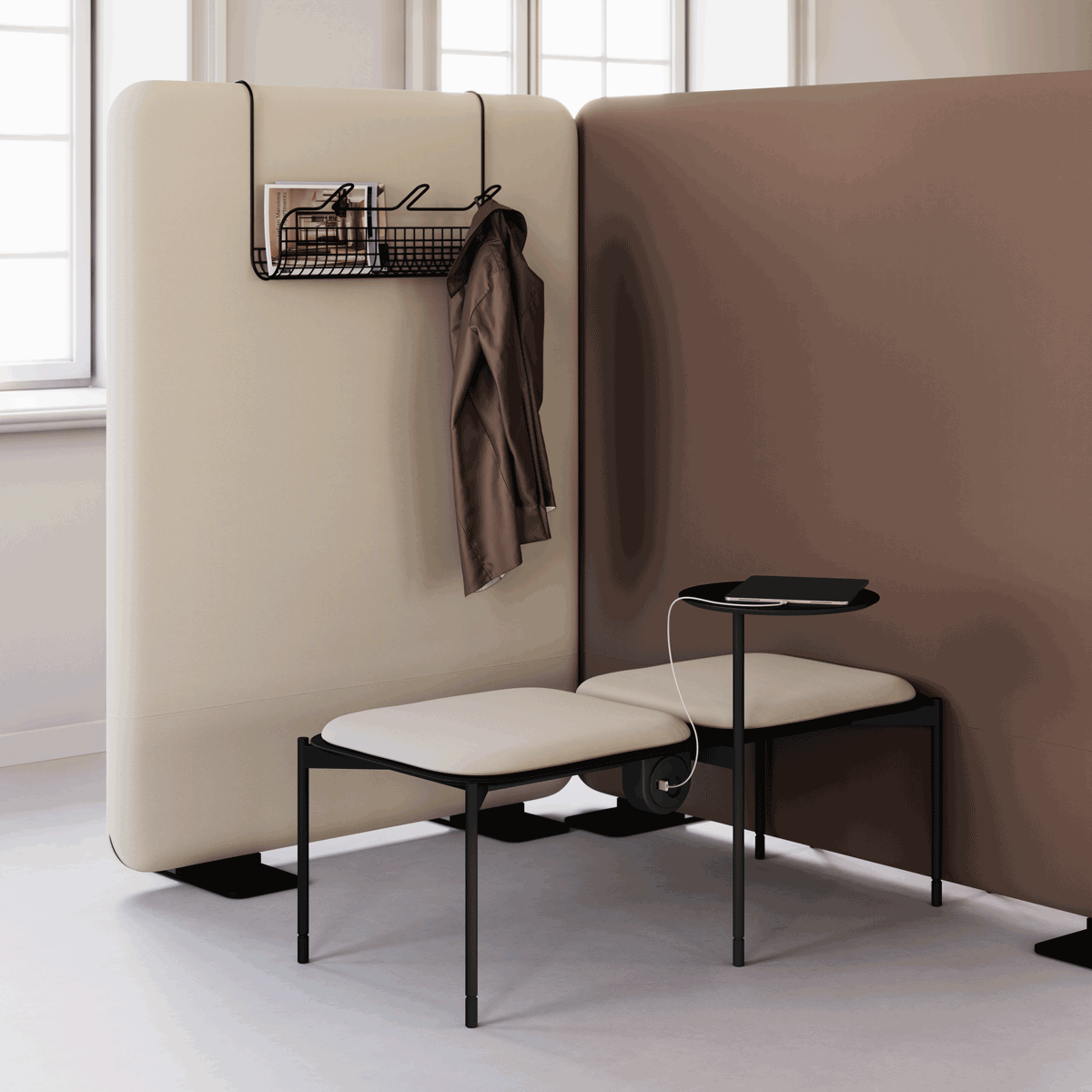
The system allows high or low tables, individual or island workstations, autonomous areas, informal meeting zones and dedicated relaxation spaces to be combined. In this way, Snake does not define a single configuration, but provides a tool for adapting to changes in the environment throughout the day.
Its strength lies precisely in the possibility of creating boundaries without closing off the space. Modules and dividing panels help shape different perspectives, making the use of areas clearer and encouraging a natural transition between concentration, interaction and breaks.
Privacy and acoustic control in shared environments
In shared spaces, noise can compromise concentration, productivity and the quality of the experience. For this reason, reconfigurability is not only about layout, but also about the ability to create more protected conditions in which people can work, interact or temporarily isolate themselves without leaving the shared environment.
The dividing panels of SNAKE respond to this need by redefining perspectives and boundaries. They do not close off the space, but organise it: they help create more intimate areas while providing privacy and targeted acoustic control. The open-cell polyurethane foam padding absorbs sound, while the Mirage sound-absorbing fabric covering combines acoustic performance with aesthetic refinement.
In a co-working environment, this means being able to design operational areas, autonomous workstations, informal zones and break spaces with greater balance. Privacy becomes an integrated quality of the design rather than a rigid separation.
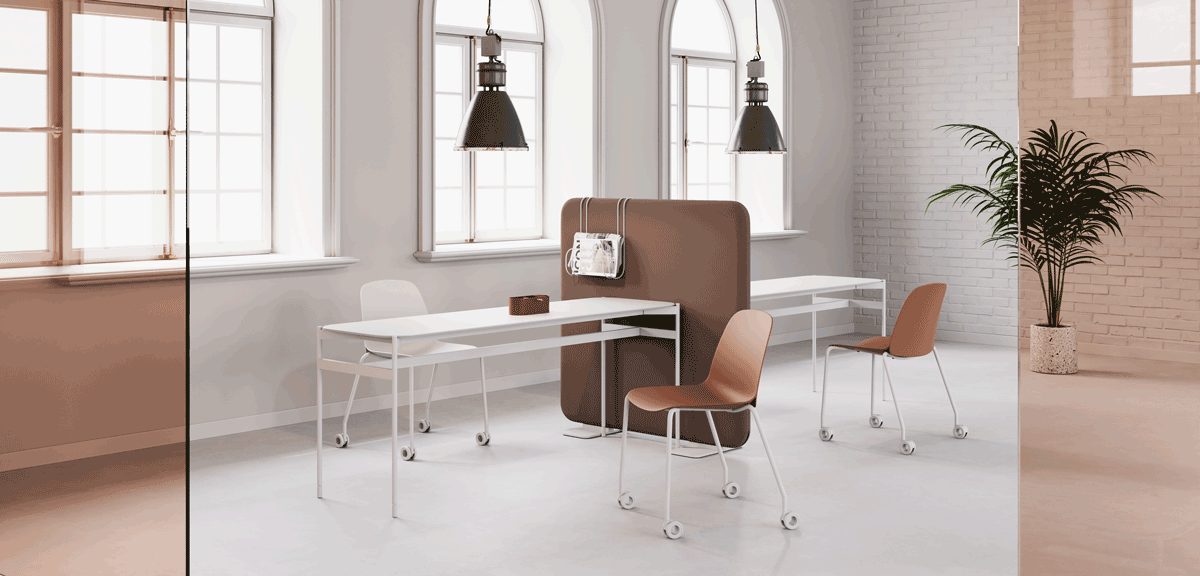
Kire with castors: a chair that follows the rhythm of the environment
In a co-working space, even a single chair must be able to accompany change. Activities transform rapidly: an individual workstation can become part of a small group, an operational moment can give way to an informal discussion, and a layout can be modified to respond to different needs.
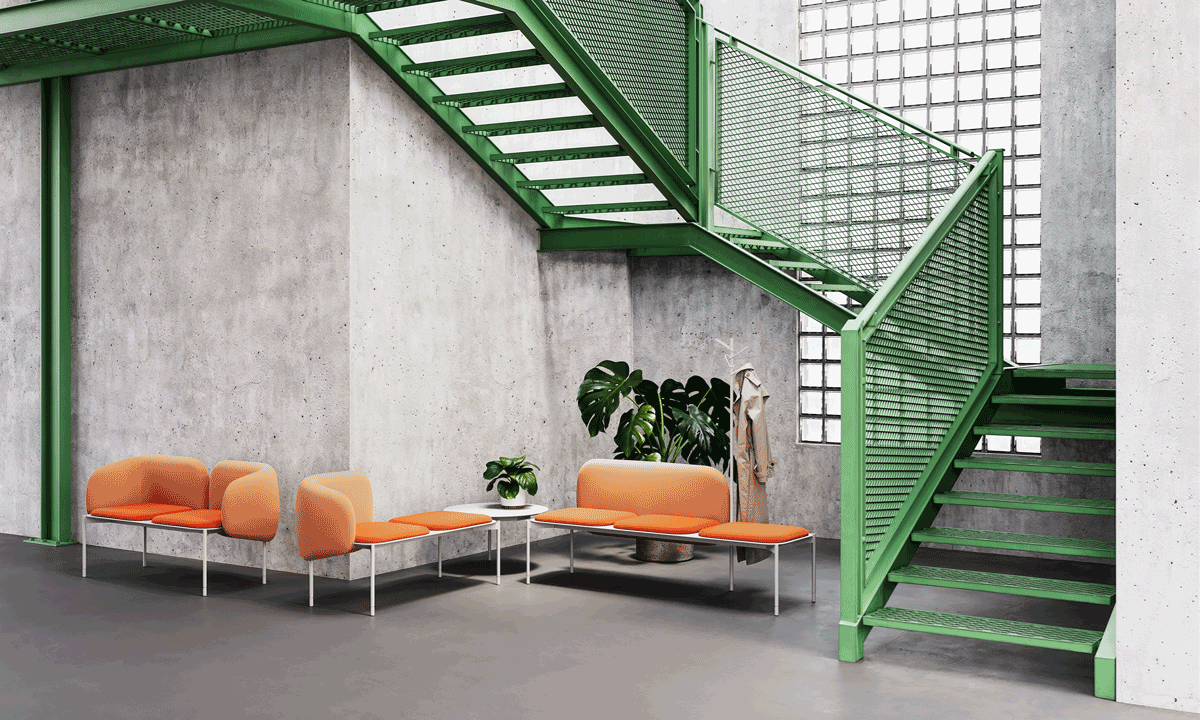
KIRE in the castor version interprets this flexibility in a simple and immediate way. The ability to move easily allows the chair to follow the rhythm of the environment without tying people to a fixed configuration. It is a solution suited to shared spaces where mobility, lightness and practicality become part of the everyday experience.
In this sense, Kire does not work only on the function of the chair, but on the freedom to use the space. It helps make co-working more dynamic, encouraging natural transitions between individual work, collaboration and moments of interaction.
In summary: 3 design criteria for co-working spaces
Designing a co-working environment means creating a space capable of changing without losing coherence. It is not enough to introduce mobile furniture or create different zones: the design must bring together flexibility, comfort, privacy and identity.
1. Design for different rhythms: focus, collaboration, breaks
A co-working space must support activities that change throughout the day. Operational areas, informal zones and relaxation spaces must interact with one another, allowing people to alternate between concentration, discussion and regeneration.
2. Use reconfigurability as a design criterion
Reconfigurability is not simply the ability to move furniture. It is the ability to create environments that adapt to the needs of the moment while maintaining order, clarity and aesthetic continuity.
3. Integrate privacy and acoustic comfort without closing off the space
In shared environments, the quality of the experience also depends on the ability to work with greater visual and acoustic protection. Panels, modules and sound-absorbing materials help create more intimate areas without interrupting the fluidity of the environment.
Selection Design: a series of in-depth explorations
This article is part of the editorial Selection Design series, the Diemme book that interprets contemporary spaces through scenarios, products and cross-cutting themes. Each feature takes a chapter from the book and develops its content in greater depth, offering useful ideas for those who design environments capable of adapting to changes in work, hospitality and everyday life.
The next episode will be dedicated to Places to Live: a focus on home spaces, where work, relaxation and everyday life intertwine in increasingly fluid and versatile environments.
Download Selection Design
To explore the Metamorphosis of Spaces chapter in greater depth and discover the complete journey dedicated to contemporary environments, download Selection Design.
The book brings together six design scenarios and a selection of products, materials and cross-cutting topics designed to offer a new perspective on meeting spaces, work environments, learning spaces, co-working contexts, home offices and hospitality.
Frequently asked questions about the metamorphosis of spaces
How do you design a flexible co-working space?
A flexible co-working space is designed by creating environments capable of adapting to individual work, collaboration, breaks and informal moments. Mobile furniture alone is not enough: a coherent design is needed across the layout, seating, relaxation areas, privacy and acoustic comfort, so that the space can change throughout the day without losing order and identity.
Which furniture should you choose for a co-working space?
For a co-working space, it is useful to choose reconfigurable furniture, versatile seating and solutions capable of supporting different activities. Modular systems, lounge seating, chairs with castors and dividing panels help create operational areas, informal zones, relaxation spaces and more intimate workstations within the same environment.
Why is the relaxation area important in a co-working space?
The relaxation area is important in a co-working space because it allows work, breaks and regeneration to alternate throughout the day. A shared space should not support productivity alone, but also people’s well-being. Comfortable lounge seating, such as Eon Lounge, helps create areas dedicated to recovery, informal conversation and a change of pace.
What does reconfigurable furniture mean?
Reconfigurable furniture is furniture that allows the organisation of a space to be modified according to activities and people. In co-working, reconfigurability makes it possible to move from individual workstations to collaborative areas, from informal zones to more intimate spaces, while maintaining visual and functional continuity.
How can privacy and concentration be improved in a shared environment?
Privacy and concentration in a shared environment can be improved by designing more intimate areas without completely closing off the space. Dividing panels, configurable modules and sound-absorbing materials help reduce visual and acoustic interference, making it easier to work, interact or temporarily isolate oneself.
Why is acoustic comfort important in co-working spaces?
Acoustic comfort is important in co-working spaces because noise can compromise concentration, productivity and the quality of the experience. In shared environments, the use of panels and sound-absorbing coverings helps create quieter and more welcoming areas without interrupting the fluidity of the space.
What is Snake used for in a co-working space?
Snake is used to configure fluid and reconfigurable environments within a co-working space. The system makes it possible to combine individual workstations, island areas, informal zones and relaxation spaces. The dividing panels also help redefine perspectives, boundaries, privacy and acoustic control.
What role does Kire with castors play in a shared work environment?
Kire with castors serves as a mobile seating solution for shared and dynamic work environments. Its easy mobility allows the chair to follow the rhythm of the space, encouraging natural transitions between individual work, discussion, group activities and temporary configurations.
How can design and well-being be integrated into a co-working space?
Design and well-being can be integrated into a co-working space by creating areas that alternate between focus, collaboration and breaks. The quality of the environment depends on the relationship between furniture, materials, comfort, acoustics and freedom of use. Good design does not rigidly separate functions, but creates a balance between autonomy and interaction.
How can I download Diemme’s Selection Design?
You can download Diemme’s Selection Design from the dedicated download page on the website. The book brings together six design scenarios and a selection of products, materials and cross-cutting topics for interpreting contemporary spaces through design, comfort, flexibility and quality over time.