


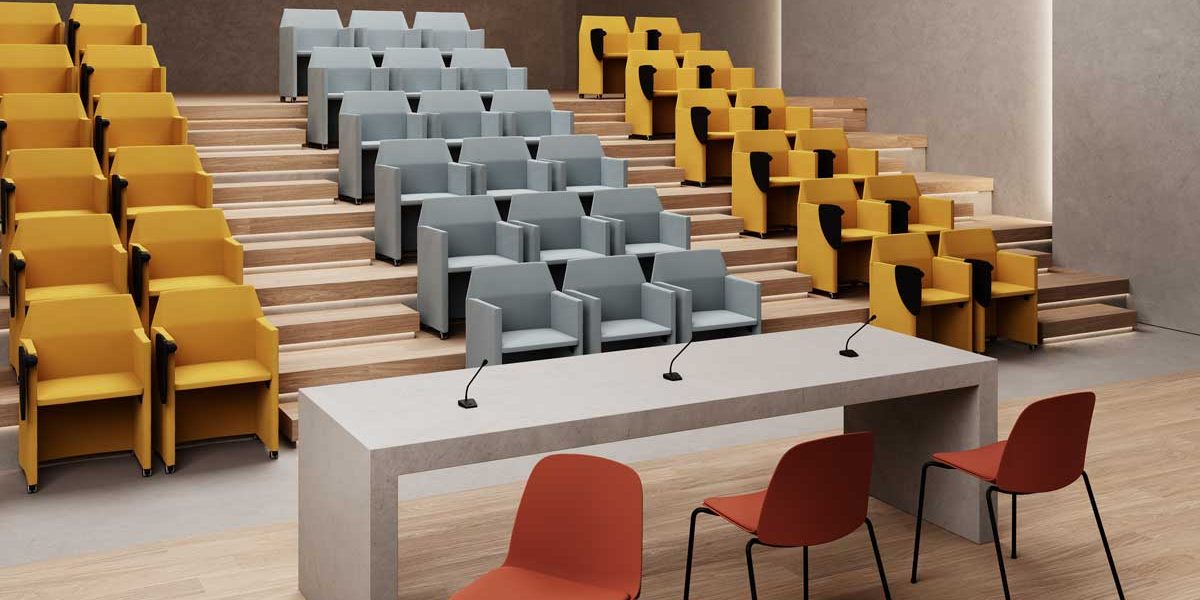
Spaces dedicated to learning are no longer static environments, defined once and for all. Today, they must be able to be transformed, following different rhythms, needs and methods, attuned to individual moments, group work, discussions, daily routines and more dynamic activities.
In this episode of Selection Design, the editorial book from Diemme dedicated to contemporary spaces, we enter into the Architectures of Knowledge focused on flexible, sustainable and welcoming educational environments, in which design becomes a tool to foster curiosity, dialogue and participation.
In this article, you will discover:
- Education Lab: designing the future of education
- Connections that shape: privacy, technology and functionality
- Coverings and comfort: the value of materials in educational spaces
- Architectures of knowledge: when space becomes an educational experience
- 3 design criteria for learning spaces
- Download Selection Design
- FAQs about spaces for the future of learning
Education Lab: designing the future of education
Contemporary learning spaces are no longer rigid environments. Today, they must be able to accommodate different times of the day and adapt to the uses of their volumes: students, teachers, work groups, individual activities and collaborative tasks. If teaching evolves towards greater autonomy, discussion and participation, the space must also become more open, legible and transformable.
An Education Lab arises precisely from this need: not merely a classroom furnished in a different way, but an environment designed to support multiple modes of learning through concentration, discussions, group work, breaks and experimentation. The seating, modular systems and materials must therefore contribute to creating a dynamic space able to be changed without losing coherence.
In this perspective, design becomes an educational tool. It does not replace the teacher, but creates the conditions for learning to be more fluid, accessible and engaging.
Circuit: modularity for collaborations, concentration and creativity
In a flexible educational environment, modularity is not only used to change the arrangement of furnishings, but serves to create different conditions for different activities: moments of discussion, working in small groups, individual concentration, informal breaks and creative exchanges.
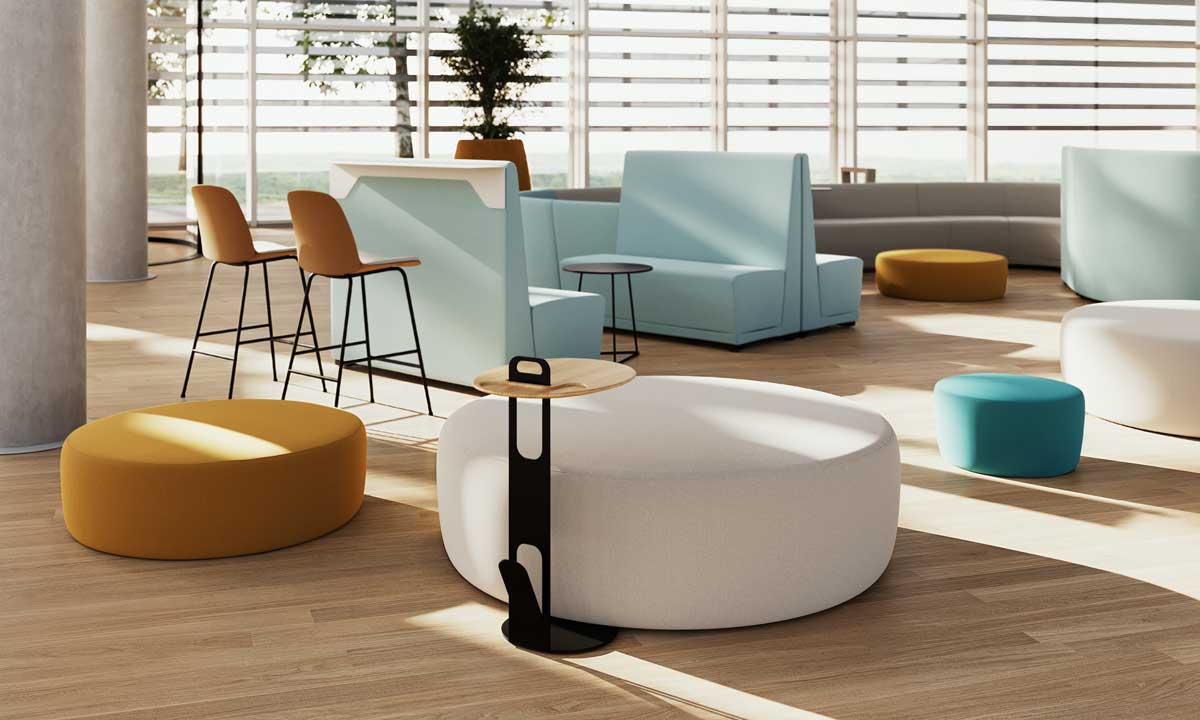
Circuit interprets this need through a system designed for large open spaces. Its curved lines and backrests in different heights help define areas with different degrees of openness and protection, without creating rigid separations. In this way, the space can accommodate multiple functions at the same time, maintaining visual and design continuity.
Sofas, ottomans and modular components allow you to build dynamic and reconfigurable environments. The seats with powered armrests for charging devices add a concrete function to the comfort dimension, rendering Circuit suitable not only for taking breaks but also for study, interaction and collaborative work.
The result is a space that is naturally modelled on the needs of contemporary learning: welcoming, practical, open to change.
Connections that shape: privacy, technology and functionality
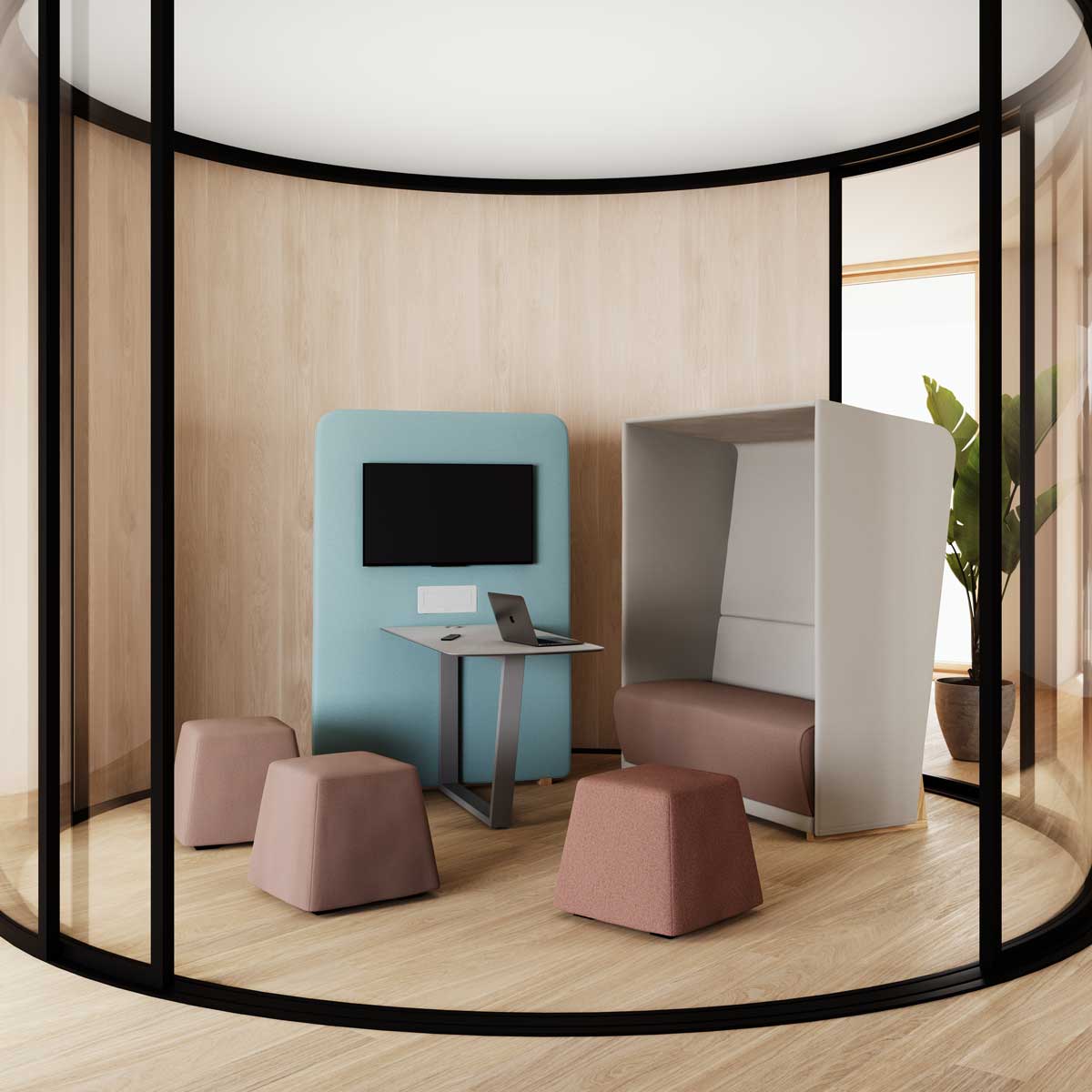
In contemporary educational spaces, the connection is not only digital: it is also the relationship between people, activities and different times of day. This is why a modular system must be able to create areas open to interaction but also offer more compact zones, suitable for concentration or a video call.
The Circuit Zoom, Circuit Privè and Circuit Media variants satisfy these needs with solutions designed for places that call for privacy and functionality. The configurations can be integrated with video call stations, charging points, screen and tablet supports, and even USB ports, transforming the seat into a small operating area without weighing down the space.
In an Education Lab, these little details make a big difference: they allow you to move from group work to individual concentration, from lesson to consultation, from discussions to active pauses. Design doesn’t just define where you sit, it helps shape the ways you learn, collaborate and connect.
Coverings and comfort: the value of materials in educational spaces
In an educational space, comfort does not just depend on the shape of the seating. It also depends on the materials, the coverings and the feeling that the environment evokes in those who use the space. Fabric becomes the point of contact between product and person: it gives voice to form, contributes to the identity of the space and makes the experience more welcoming.
In environments dedicated to learning, this choice has an even more concrete value. Coverings must support different uses, adapt to dynamic contexts and maintain aesthetic consistency even in much-used spaces. The most technical solutions meet the needs of durability and intense use, while the most decorative materials enhance forms, volumes and colours.
For this reason, in the design of an Education Lab, materials and coverings are not a mere afterthought, but are part of the language of the environment, able to transform matter into sensation and sitting into experience.
Remix 3: interweavings that formulate light
Among the coverings selected for the learning spaces, Remix 3 by Kvadrat introduces a more sensory aspect to the project. This virgin-wool fabric works on the relationship between light and colour, creating vivid, deep and never-uniform surfaces.
Designed by Giulio Ridolfo, Remix 3 intertwines aligning shades into a dynamic texture, the perception of which alters depending on the angle and light. The palette — composed of intense blues, natural reds and soft neutrals — gives a sober and timeless elegance, suitable for contemporary environments that must be welcoming but not excessive.
In an Education Lab, a covering of this type does not only have an aesthetic function, but contributes to rendering the space warmer and more identifiable, transforming the seating into a tactile experience: a way to give identity to the environment without overlooking dimension, combining comfort, colour and perceived quality.
Architectures of knowledge: when space becomes an educational experience
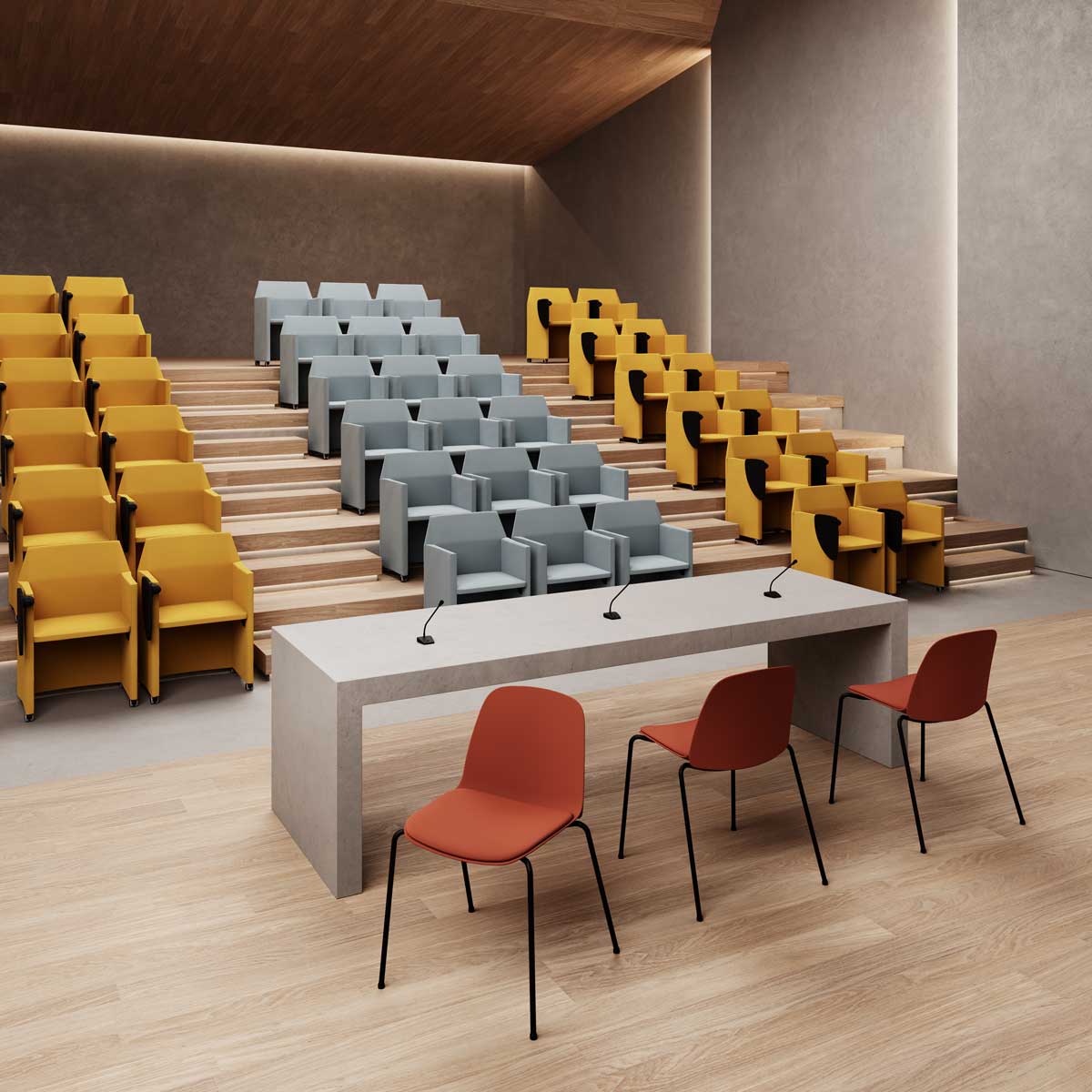
Educational spaces are constantly changing because the people who live in them, the methods of learning and the activities that take place within them change. They are no longer rigid environments, designed for a single use, but places able to adapt to different occasions: individual study, discussions, teamwork, breaks, practical activities and more informal situations.
From this perspective, education becomes a living experience. The space does not just contain activities, but helps to make them more fluid, accessible and participatory. Modularity, comfort and sustainability thus become concrete design criteria, helping to forge dynamic environments, able to ignite curiosity, promote dialogue and enhance every moment of learning.
Kire: materials that talk about the future
In spaces dedicated to learning, sustainability cannot be separated from everyday use. A piece of furniture must be resistant, functional and suitable for dynamic contexts, but must also come from more responsible material choices. It is here that the project must solve a vital issue: how to reduce environmental impact without sacrificing quality, comfort and durability?
Kire interprets this direction through the body made of new-generation, 100%-recycled black polypropylene. A regenerated material, designed to offer effectiveness and quality comparable to virgin plastic, maintaining a balance between function and sustainability.
In an Education Lab, a seat like Kire responds to multiple needs: lightness, practicality, strength and consistency with environments that often change configuration. It is an example of how design can contribute to building more conscious educational spaces, where the choice of materials becomes an integral part of the project.
Origami: lightness and versatility in spaces for learning
In a dynamic educational environment, even a single seat can contribute to the overall flexibility of the space. Origami folds right into this logic as a community seat designed for moving contexts, where activities change and furnishings must naturally follow different rhythms.
Its presence within the Education Lab scenario tells a precise idea: designing learning spaces means offering lightweight, versatile and easily-integrated solutions, capable of supporting moments of discussion, individual work or group activities without rendering the layout rigid.
Alongside more structured modular systems such as Circuit and sustainability-conscious seats like Kire, Origami completes the reading of the educational space with a discreet and functional presence. It is a solution that helps keep the environment tidy, legible and ready to transform according to the needs of the day.
3 design criteria for learning spaces
Designing a contemporary educational space means creating an environment capable of changing along with the activities it hosts. This calls for more than just flexible furnishings, requiring a coherent relationship to be built between layouts, seating, materials and methods of use.
1. Designing flexible, non-rigid environments
The learning spaces must be able to accommodate different needs: individual concentration, group work, discussions, breaks and more dynamic activities. Flexibility becomes effective when it allows the space to transform without losing order and readability.
2. Encouraging dialogue, concentration and group work
An Education Lab must support multiple levels of interaction. Modular systems, versatile seating and reconfigurable configurations help to create areas open to interaction, but also more cosy areas for focusing and consultation.
3. Choose materials and solutions designed to last
In educational settings, daily use is intense. For this reason, materials, coverings and construction solutions must contribute to comfort, strength and sustainability. Quality is not only about the image of the space, but its ability to remain welcoming and functional over time.
Download Selection Design
To delve into the chapter Architectures of Knowledge and discover the full journey through contemporary spaces, download Selection Design: the book consists of six design contexts and a selection of products, materials and cross-cutting studies to interpret contemporary spaces through design, comfort, flexibility and quality over time.
FAQs about the educational labs and learning spaces of the future
How do you design a flexible educational space?
A flexible educational space is designed by creating environments capable of adapting to lessons, group work, individual study and discussion time. This means more than just choosing furniture, calling for a consistent design between layouts, seating, materials and functions, so that the space can change without losing order and identity.
Which furnishings are best for a classroom or an Education Lab?
For a classroom or an Education Lab, it is a good idea to choose furniture that is flexible, modular and easily reconfigurable. Versatile seating, modular systems and solutions with integrated functions help to support different activities, from discussions to time for concentration, face-to-face lessons and teamwork.
What is an Education Lab?
An Education Lab is a learning space designed for different activities and more dynamic teaching methods. Unlike a traditional classroom, an Education Lab must foster autonomy, dialogue and collaboration, adapting to groups, individual time and practical activities.
Why is modularity important in learning spaces?
Modularity is important in learning spaces because it allows you to change the layout according to the activities. A modular system means you can create areas for interaction, concentration, breaks or collaboration, maintaining visual and functional continuity.
How can comfort and concentration be improved in an educational environment?
Comfort and concentration in an educational environment are improved by choosing seating, materials and configurations suitable for everyday use. Backrests, proportions, upholstery and the organisation of space affect the quality of the experience, especially in environments used for many hours and by different people.
What materials are suitable for furnishings for educational spaces?
Materials suitable for furnishings for educational spaces must combine resistance, comfort, ease of management and aesthetic quality. In learning contexts, materials and coverings are not just a decorative choice, but contribute to the duration of the space, its identity and the perception of feeling welcome.
How can sustainability be included in furnishings for schools, universities or other educational settings?
Sustainability in furnishings for schools, universities or training spaces is achieved by choosing recycled materials, durable solutions and products designed for intense use. Kire, for example, interprets this direction through a body in new-generation, 100%-recycled black polypropylene that balances function, quality and responsibility.
What Diemme solutions are present in the Architectures of Knowledge context?
Architecture of Knowledge contexts count Diemme solutions such as Circuit, Origami and Kire. Circuit helps to create modular areas for interaction, concentration and breaks whereas Origami introduces versatile seating for dynamic environments. Kire then brings the theme of recycled materials and sustainability to the project.
What purpose does Circuit serve in an educational space?
Circuit is used to create modular and reconfigurable areas within an educational space. Thanks to sofas, ottomans, modular components and variants designed for privacy, video calls and device charging, Circuit allows you to organise areas for different activities without rendering the context rigid.
How can I download Selection Design by Diemme?
You can download Selection Design by Diemme here or from the dedicated download page on the website. The book consists of six design contexts and a selection of products, materials and cross-cutting studies to interpret contemporary spaces through design, comfort, flexibility and quality over time.