


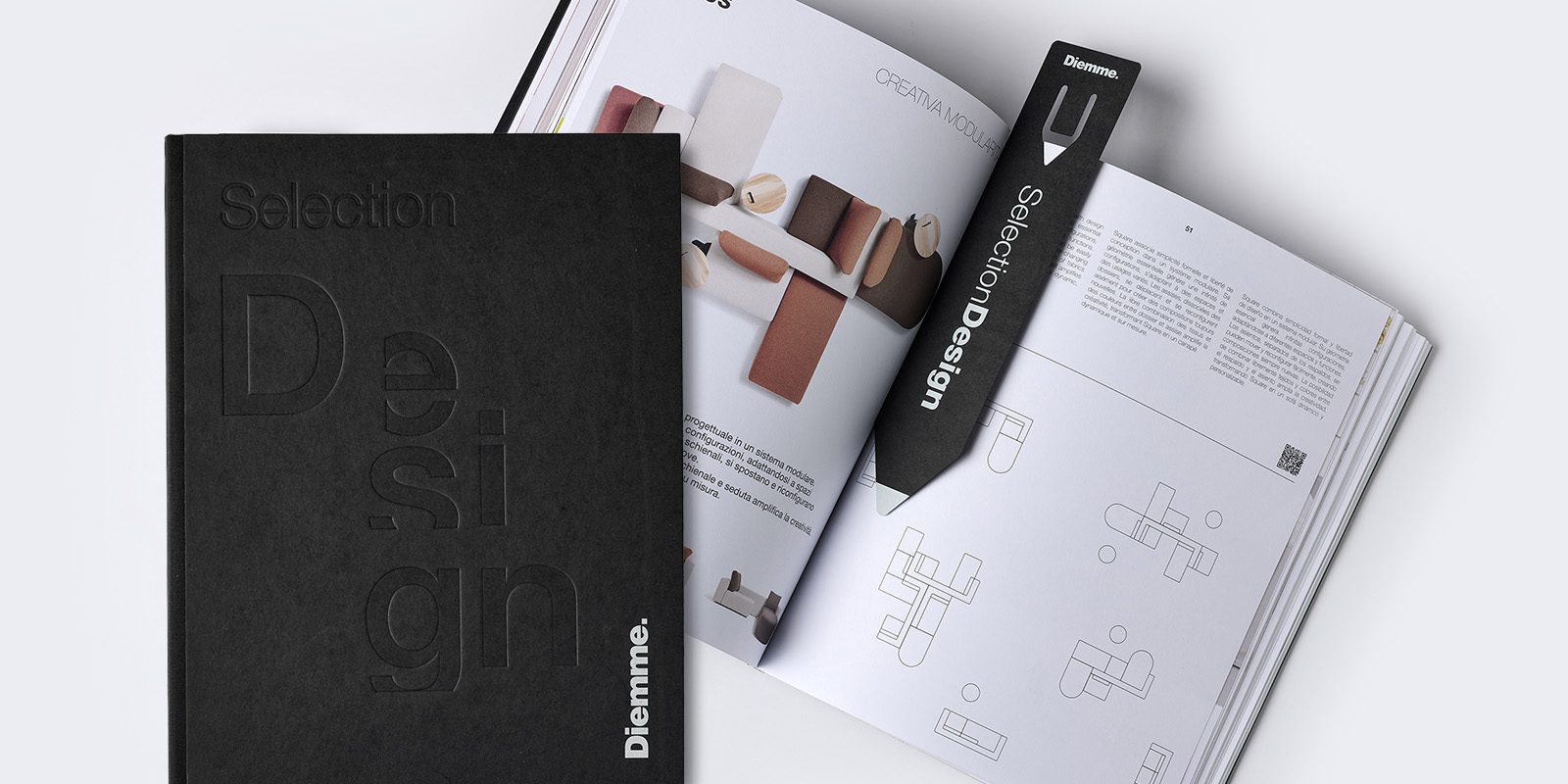
Meeting spaces are no longer simple areas of passage. They are places where relationships and identity are forged in no time at all – when taking a little break, while waiting, a conversation that starts spontaneously … In Selection Design, we interpret such places as fluid environments, where design accompanies everyday actions and transforms time into an experience of comfort and beauty.
Selection Design is the editorial book by Diemme dedicated to contemporary spaces – a collection of environments, products and inspirations to explore how ways of welcoming, working, meeting and transforming evolve. Content that goes beyond the logic of a catalogue, connecting contexts, materials and configurations to support architects and designers in understanding contemporary projects.
In this article, we will discuss:
Meeting spaces – the value of relationships and shared aesthetics
Meeting spaces celebrate the value of relationships and shared aesthetics. We envision lobbies, galleries, and public areas as fluid environments, where design accompanies everyday gestures and encourages spontaneous connections. Between the rhythm of movement and the stillness of pause, these spaces become moments of comfort and beauty, where functionality meets emotion.
Designing a meeting space means creating balance and atmosphere, devising a recognisable place without being cumbersome, welcoming without being intrusive. It means considering how people move through the environment, where they stop, how long they stay and what experience they take away with them. This is where design becomes a form of relationship, a discreet yet precise way to give rhythm, identity and quality to what happens in the space.
Lounge areas – conversations in motion
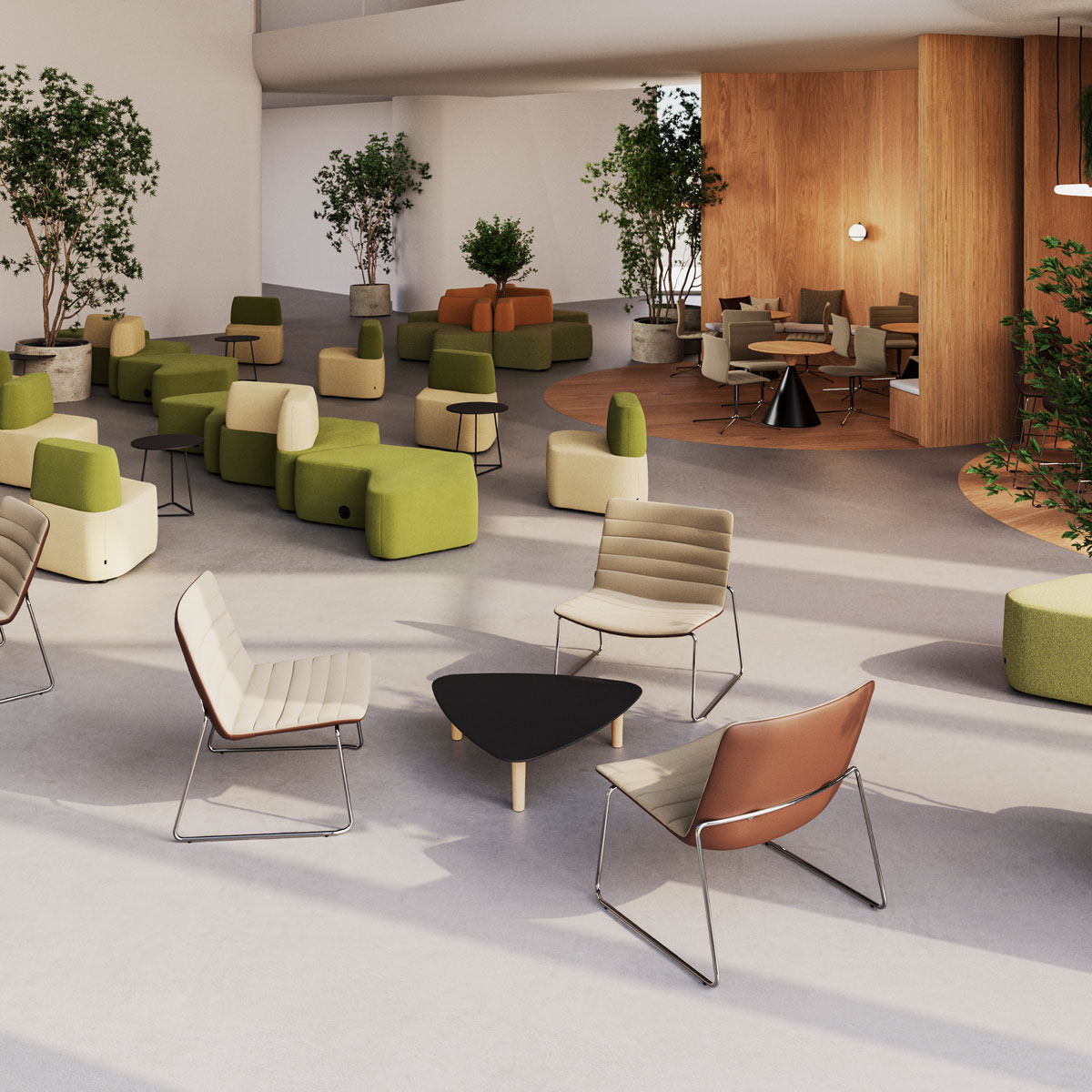
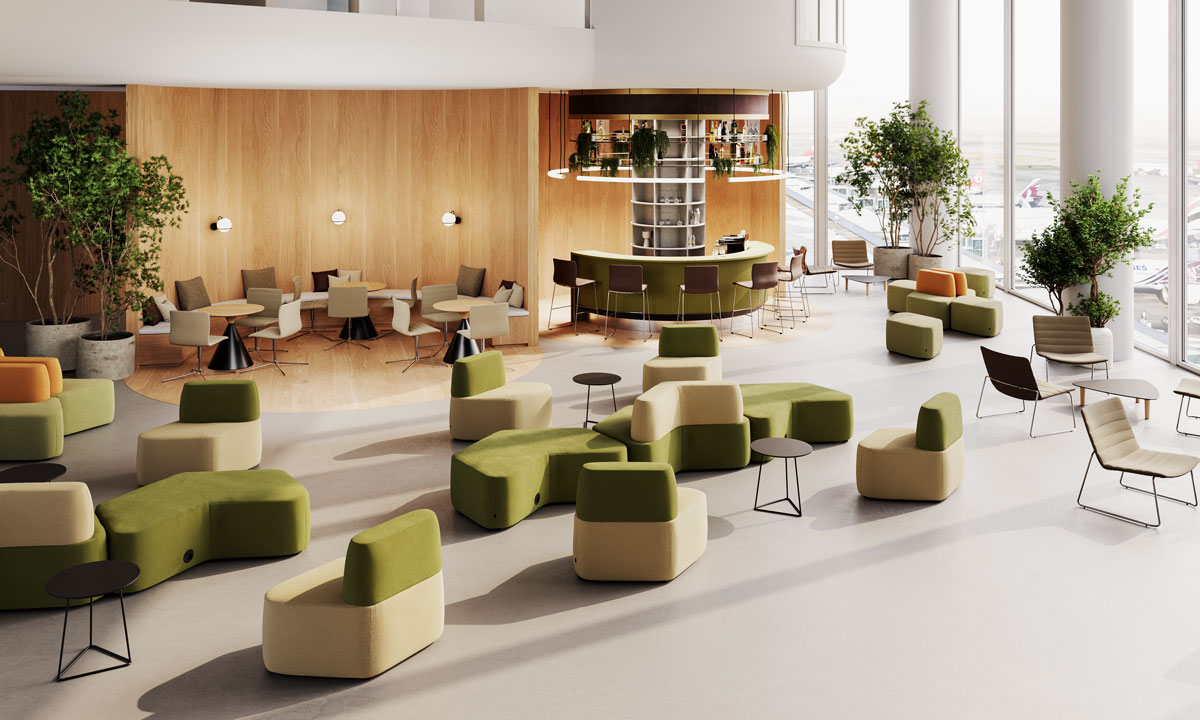
Entrances and public areas are the beating heart of every building: places of encounter, relationship, and rest. In a contemporary lounge area, comfort, privacy, and business coexist. Each area adapts to the needs of the moment, turning waiting into an experience.
In Selection Design, the lounge is not a ‘secondary’ area but a space to be designed with the same care as an operational environment, with compositions that make the layout more fluid, seating that encourages brief conversations or longer stays, and details that maintain connection naturally, without interrupting the flow of welcoming people.
CROSS: organic sofas for fluid lounge areas
In a lounge area, the composition must invite conversation without making the space feel awkward. The organic sofas CROSS interpret this need by transforming the area into a fluid environment, suitable for both informal chats and moments of relaxation. The compositions can also be customised through different coverings for the base and backrest, to create recognisable and welcoming atmospheres.
In contexts where the lounge also becomes a space for light working, CROSS integrates outlets and USB ports, thus maintaining a constant connection without introducing foreign elements to the welcoming feel. This is an example of how, in Selection Design, comfort is not only softness but a balance between form, use and function.
Upholstery – enduring beauty
Modern lounge areas are no longer simple places to wait but are spaces of sociability and wellbeing, where materials and upholstery define the quality of the experience, through the sensation to the touch, the depth of the colour, the perception of care. But in high-traffic environments, quality must also be operational, being able to withstand time and daily use.
Daytona: a fabric designed for contemporary lounge areas
Daytona, for example, is a fabric distinguished by its velvet effect and rich colours, designed for contemporary environments where the material must ‘capture’ attention without being excessive. In lived-in spaces, however, quality is also measured by a very simple factor: how easy it is to keep the environment clean and well-maintained. The Aquaclean technology allows for the removal of wine, coffee, food stains and even most ink stains simply with water, reducing maintenance complexity, especially in heavily-used areas.
OEKO-TEX and SAFEFRONT
When a covering is chosen for a lounge, it’s not just about how easy it is to clean. Also important is what is guaranteed in terms of safety and reliability, since the material is in daily contact with people. This is where certifications come into play, not as ‘labels’ but as verifiable indicators of quality.
OEKO-TEX® STANDARD 100 is a certification attesting that the fabric has been tested for the presence of harmful substances and meets safety criteria throughout the supply chain, from yarn to finished product.
SAFEFRONT, rather, is a technology/protection that acts as a barrier against dust mites and bacteria, designed to boost fabric hygiene in contexts of daily use.
Galleries – design in dialogue with art
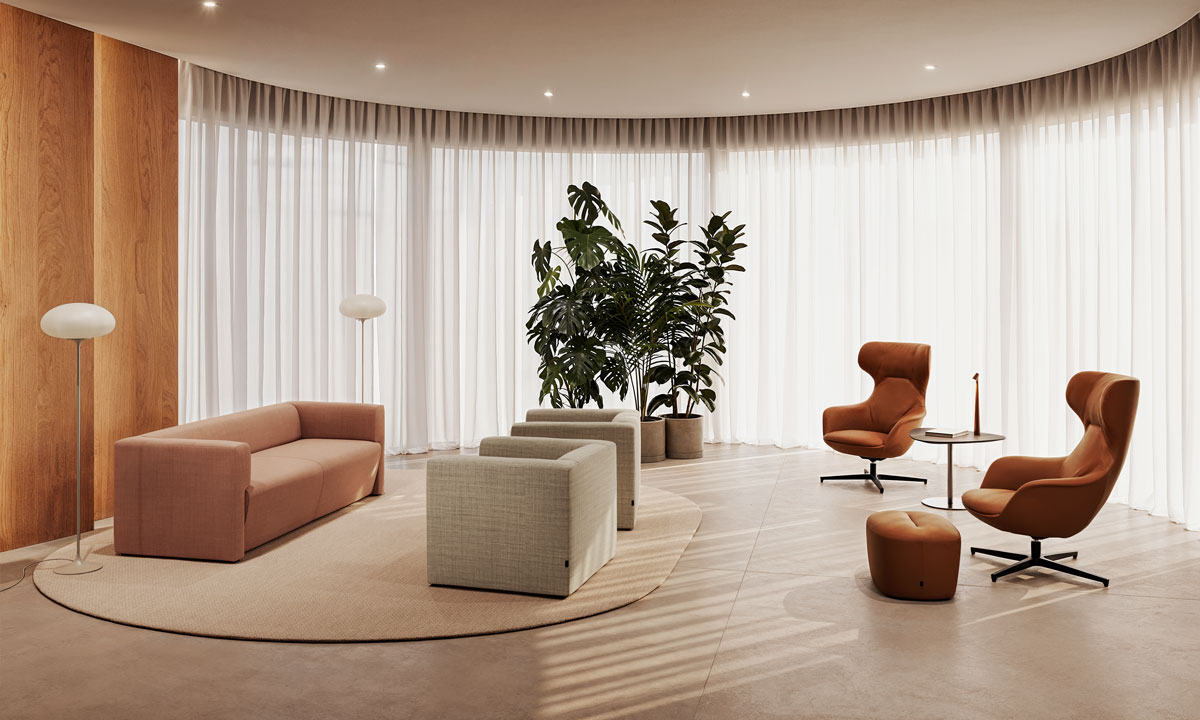
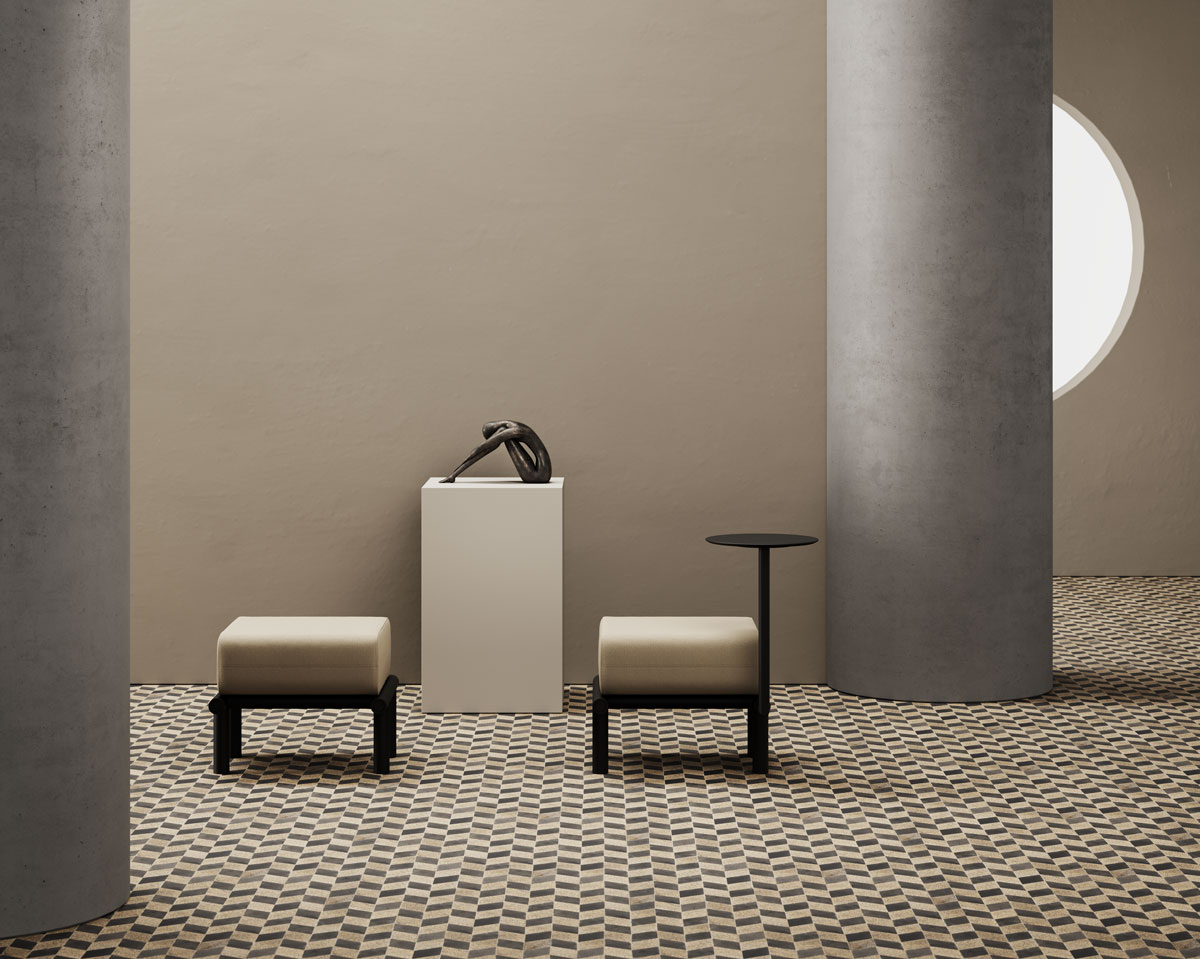
In galleries, museums and spaces with high aesthetic impact, seating is not mere accessories but part of the scene. Forms, materials and colours create recognisable and customisable seating landscapes, capable of engaging in dialogue with the surrounding space. In such contexts, comfort is not an addition but is what enables a slower and more mindful experience, transforming a little time out into part of the overall experience.
In Selection Design, this concept translates into a clear idea: designing a gallery means working on balance and proportion, choosing elements that support the identity of the environment without overwhelming it. It is here that design becomes curation, where proportions, finishes and colours do not ‘fill’ the space but interpret it.
ARPEGGIO: when the sofa becomes a work of art
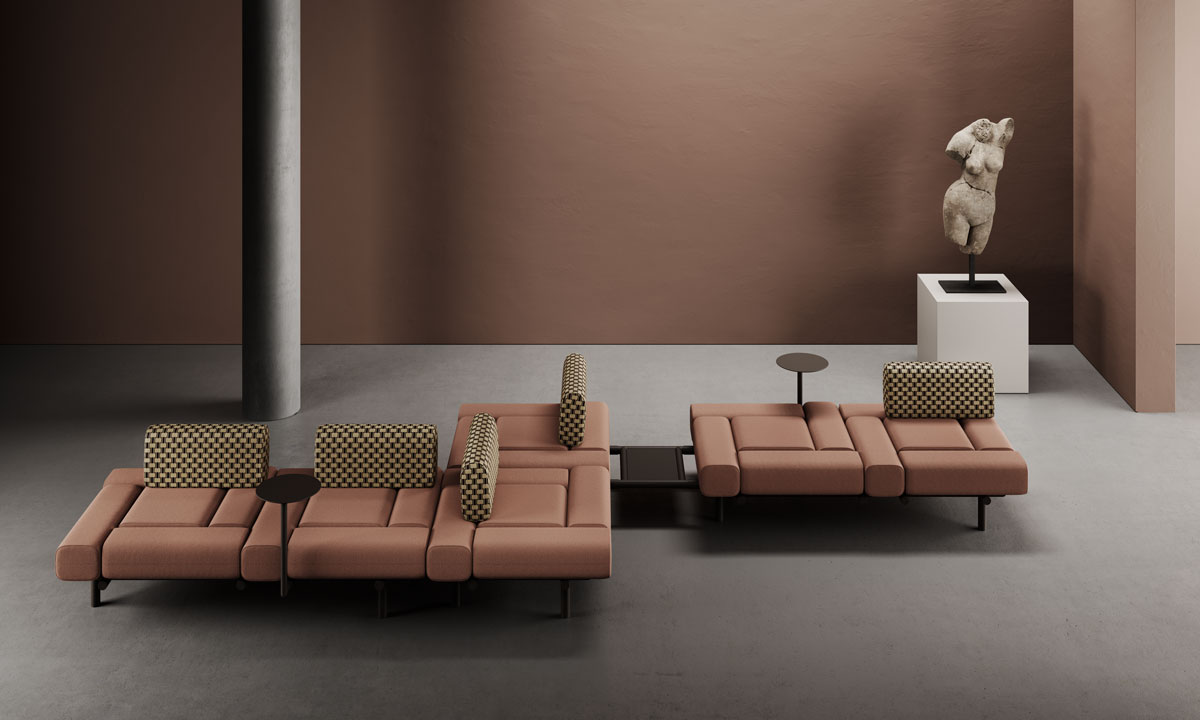
In this logic fits ARPEGGIO, a system that interprets harmony and modulation in a contemporary key, to transform meeting spaces into dynamic and welcoming environments. Its identity is born from formal harmony, flexible modularity and attention to detail, allowing for free and personal configurations adaptable to different contexts.
A light and almost schematic ‘seating landscape’ comprised of combinations, visual pauses and modules that create rhythm, like notes in a musical score. This approach works particularly well in cultural spaces with a strong aesthetic impact, where furnishing must be a measured yet recognisable presence, capable of welcoming and making the experience memorable.
Selection Design: continue the journey
This episode starts the journey through meeting spaces, places where hospitality becomes identity and where every choice – configurations, upholstery, details – influences people’s experience. In the next chapter, the same logic shifts to the geographies of working, learning environments and hybrid spaces, offering new and useful interpretative criteria for those who design and those seeking inspiration for contemporary spaces.
Download Selection Design
Discover a new way to read contemporary space: download Selection Design here to be guided through six chapters and all the cross-cutting themes that intertwine work, meeting, learning, home and hospitality into a single design vision.
FAQs about meeting spaces
What is meant by meeting spaces in an interior/commercial project?
Meeting spaces refer to lobbies, lounges, waiting areas and public places where people stop, gather and interact. In Selection Design, these areas are described as fluid environments where design accompanies daily actions and encourages spontaneous connections.
How do you design a welcoming lounge area?
A welcoming lounge area is designed by balancing comfort, privacy and flexibility of use. The goal is to transform waiting into an experience, through fluid layouts, seating suitable for short or long stays and functional details discreetly integrated.
What elements make a waiting area more functional?
A waiting area becomes more functional when it offers comfort, support surfaces and easy maintenance over time. In contemporary contexts, even the possibility of staying connected (for example, with integrated outlets and USB ports) can enhance the experience without compromising the feeling of welcoming.
Why is the choice of upholstery important in high-use common areas?
The choice of upholstery is important because it affects aesthetics, maintenance and durability. In lounge and common areas, a fabric must remain attractive over time and allow for efficient daily management, especially in heavily-used spaces.
How is fabric maintenance managed in heavily-used spaces?
Fabric maintenance in heavily-used spaces is managed by selecting materials designed for easy cleaning and lasting durability. The book mentions, for example, Aquaclean technology, which allows stains to be removed with water alone, reducing cleaning time and complexity.
What does it mean for a fabric to be OEKO-TEX® certified?
A fabric certified to OEKO-TEX® STANDARD 100 has been tested for harmful substances. It is a useful point of reference when the upholstery is in daily contact with people and verifiable safety criteria are required.
What does it mean to design meeting spaces ‘for contexts’ rather than for products?
Designing for contexts means starting from the use of the space and its rhythms, not from a list of furnishings. Selection Design by Diemme proposes this approach in connecting configurations, materials and comfort to the actual context, transforming hospitality and welcoming into a coherent experience.
How can I download Selection Design by Diemme?
You can download Selection Design by Diemme from the dedicated download page on the website. The book is comprised of chapters and transversal focuses to interpret contemporary spaces and to support design choices regarding configurations, materials, comfort and durability.