


In hospitality environments, the welcome begins with the space itself. Even before a service, a conversation or a gesture, the setting, furnishings and comfort shape the first impression.
Entrance halls, lobbies, reception areas and lounges have become hybrid environments where comfort, functionality and identity must coexist. Seating, materials and furniture layouts help define the experience from the very first encounter, turning an entrance from a simple passageway into an integral part of hospitality.
In this instalment of Selection Design, Diemme’s editorial publication dedicated to contemporary spaces, we explore welcoming environments: places where every design decision helps make waiting more comfortable, time spent more enjoyable and the space’s identity more distinctive.
In this article, you will discover:
- how hospitality design changes when welcoming, waiting, interaction and relaxation share the same environment;
- why entrance halls, lobbies and reception areas need furniture that combines comfort, functionality and identity;
- how LOFT interprets lounge areas through its armchair and sofa;
- how CLOP meets needs for versatility, ease of use and ergonomics;
- the role of PLIÉ and NOVA in hospitality projects;
- why materials, durability and ease of maintenance are essential in heavily used spaces;
- how polypropylene and ISO 14001 certification fit into Diemme’s approach to sustainability.
Welcoming spaces: when hospitality becomes an experience
In hospitality environments, welcoming people means designing for the entire duration of their stay. What matters is not only the moment of arrival but also what follows: waiting, finding one’s way, meeting others, working for a few minutes, talking or taking a break.
This is where furniture becomes part of the experience. An intimate seat invites people to pause, an open arrangement encourages interaction, and a well-organised lounge makes it natural to stop or meet. Shapes, layouts, comfort and materials are therefore not secondary details but tools that directly influence how a space is perceived and used.
For this reason, entrance halls, lobbies, reception areas and lounges should accommodate different uses while maintaining continuity between appearance and function. The value of design lies in transforming a transit area into a place where every element helps people feel welcomed, oriented and at ease.
Hospitality: designing entrance halls, lobbies and reception areas
Entrance halls, lobbies and reception areas are the first point of contact between a person and a place, but their role now extends beyond the initial welcome. People use them to find their way, wait, meet someone, work briefly or take a break. They must therefore support different activities without losing clarity or identity.
Furniture provides a way to organise these moments. Individual chairs, armchairs, sofas and accessories can create intimate or open areas, accommodate a short visit or encourage a longer stay. The layout must combine comfort, ease of use and visual quality, avoiding rigid arrangements unsuited to different flows of people.
This is precisely the goal of the hospitality concept in Selection Design: to transform entrance and waiting areas into environments that enhance the experience and respond to the many ways contemporary hospitality is lived.
LOFT: comfort and sociability in lounge areas
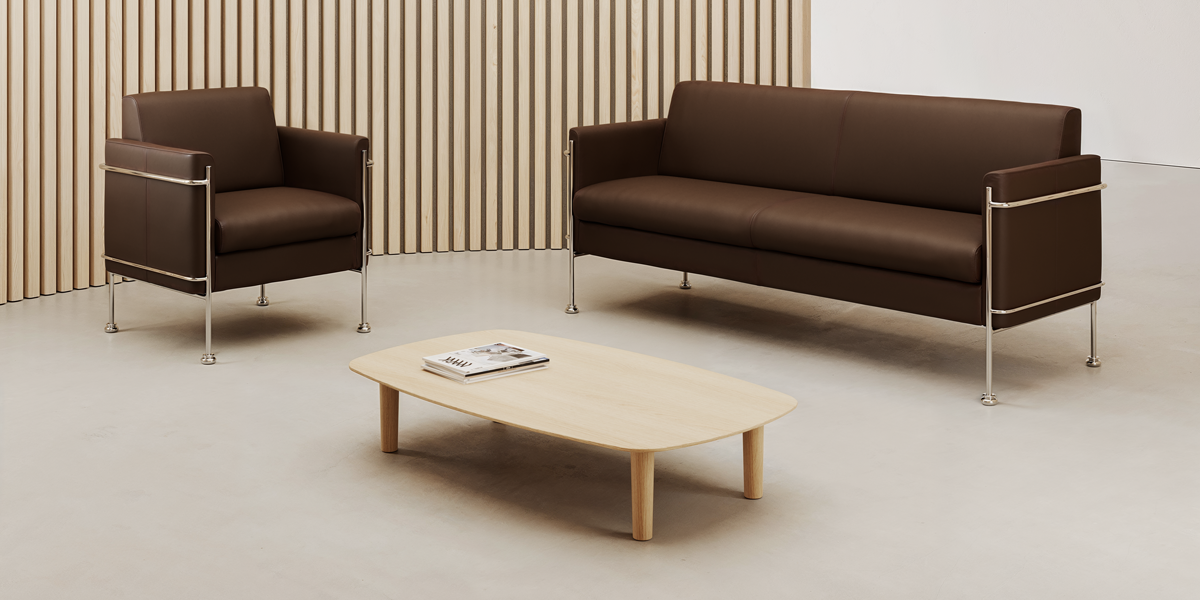
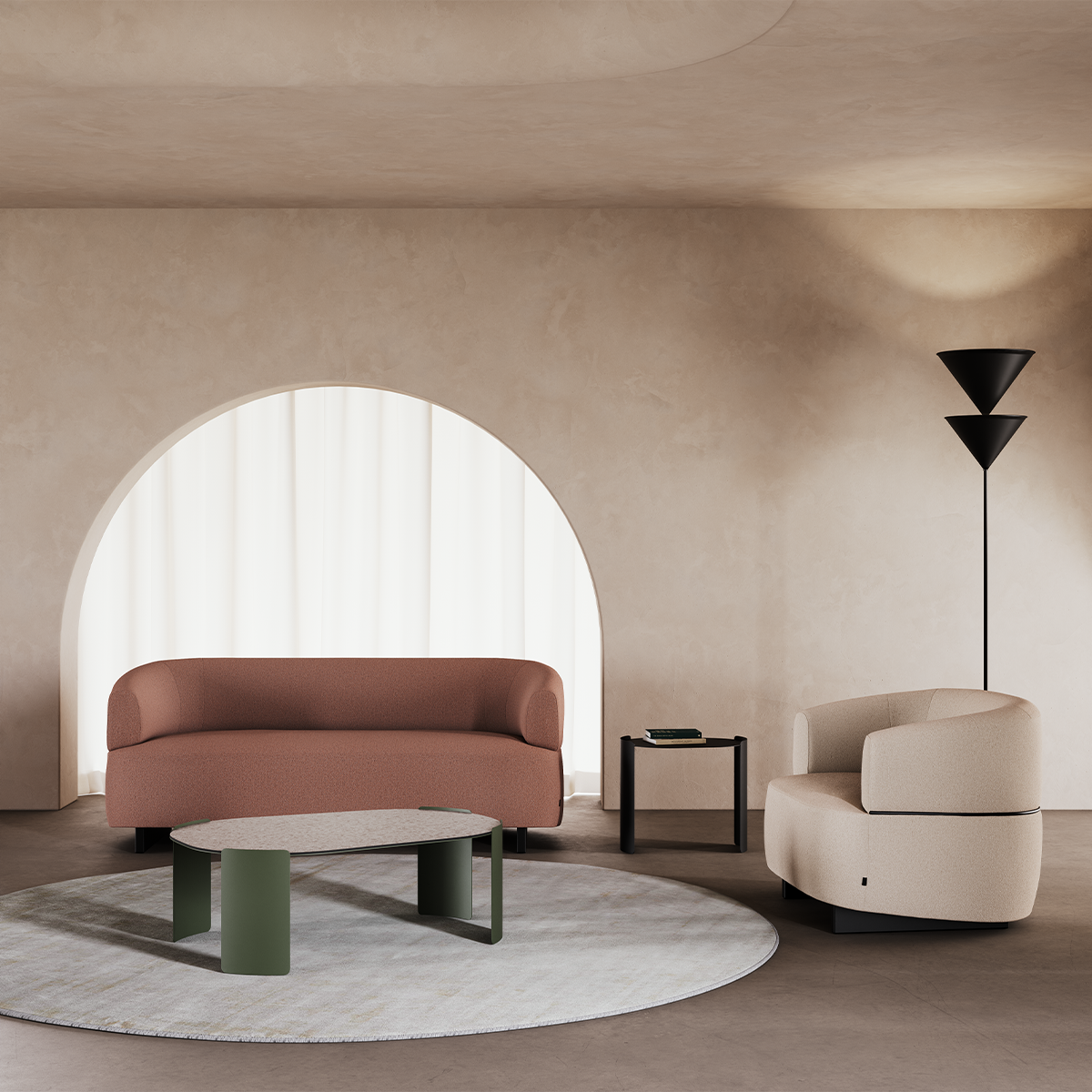
In lounge areas, a warm welcome depends above all on creating a place where people naturally want to stay. LOFT, available as an armchair and sofa, was designed for this purpose: soft volumes, flowing lines and a broad backrest create seating for waiting, conversation and relaxation.
Different configurations allow greater freedom in organising the space. The armchair can form more individual, intimate settings, while the sofa helps create areas for socialising and longer stays, whether in groups or more elaborate arrangements.
The relationship between structure, upholstery and details also shapes the project’s character. With LOFT, the option to combine different finishes and choose the optional black metal tube between the seat and backrest makes it possible to adjust the collection’s visual impact and integrate it into different hospitality settings.
The result is seating that does more than provide comfort: it helps define the lounge’s atmosphere, whether intimate, sociable or more formal, according to the project.
CLOP: versatility and comfort in welcoming spaces
In hospitality settings, not every seat needs to serve the same length of stay. Some moments involve a brief wait, others call for greater concentration, while in others seating simply supports the transition from one activity to another.
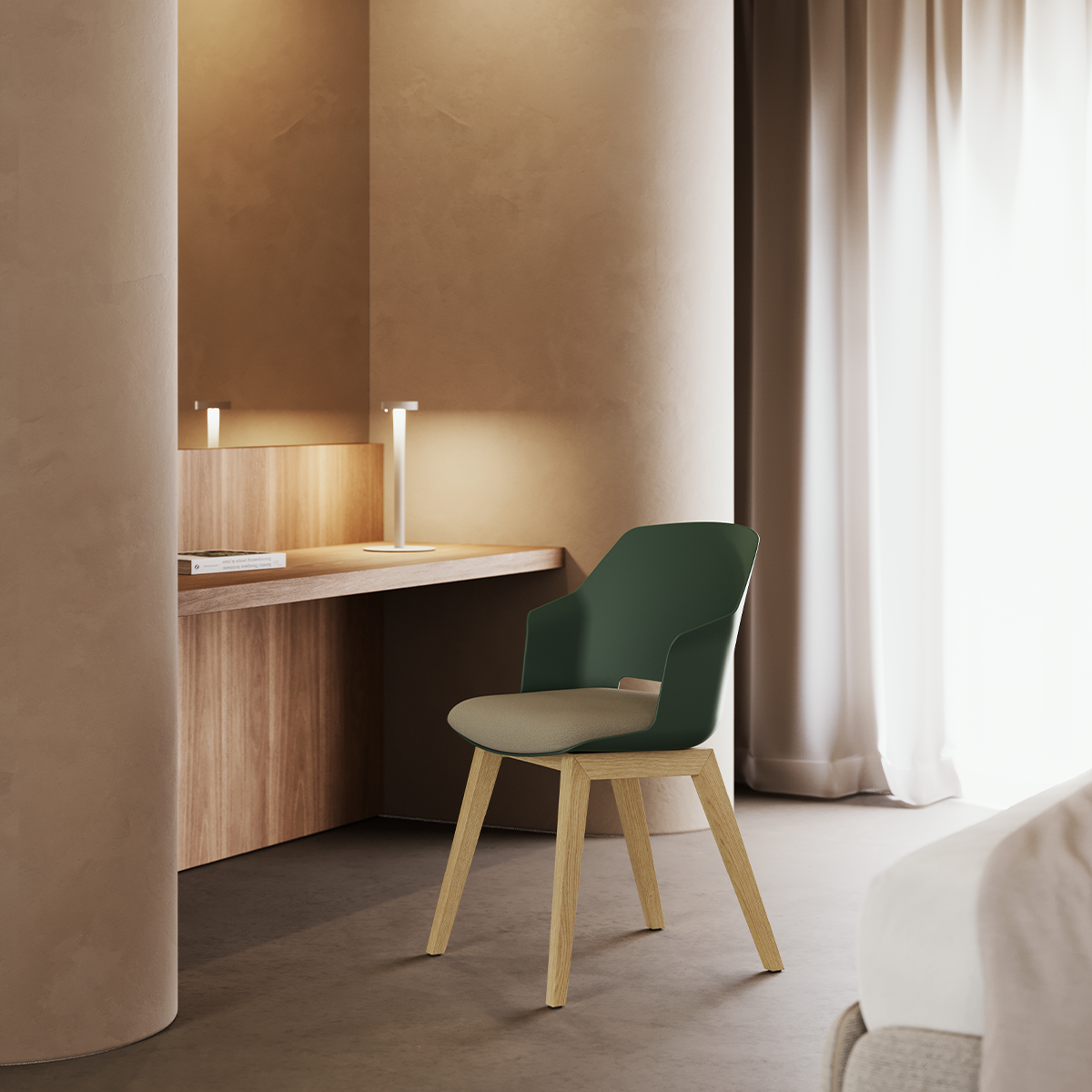
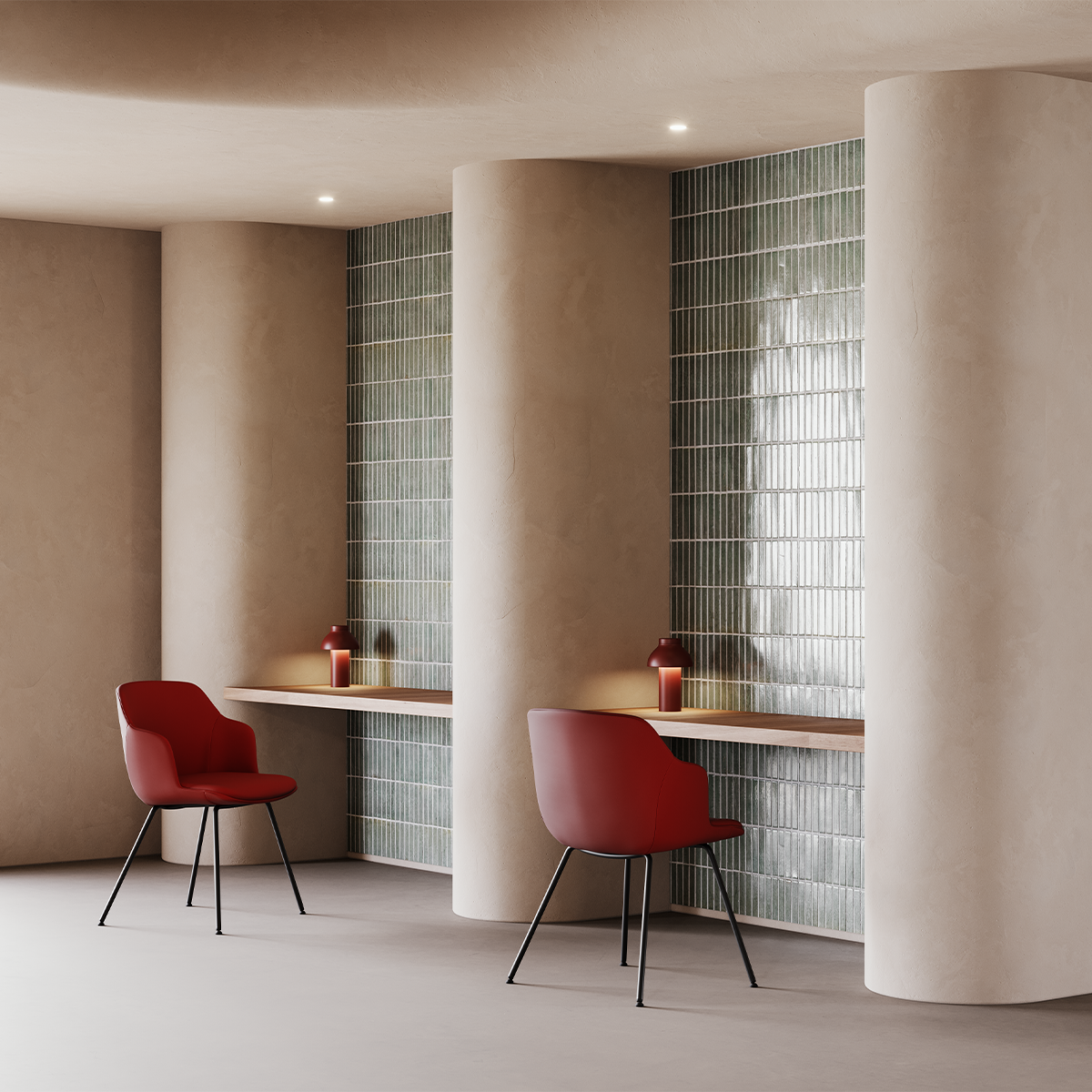
CLOP responds to this variety through its light, enveloping design and wide range of configurations. Its versions suit different contexts, from waiting areas to more task-focused or shared spaces, while maintaining continuity in comfort, ergonomics and visual identity.
The possibility of customising the frame, base and upholstery makes CLOP particularly suitable for contract projects, where several environments must be coordinated without sacrificing overall consistency. Versions for communal spaces can also include a writing tablet or be configured as bench seating, further extending their uses.
Its strength lies in the ability to adapt to different functions while retaining a recognisable appearance consistent with the overall spatial design.
Different spaces, one identity
A hospitality project includes environments with very different functions: reception areas, lounges, waiting areas, conversation spaces, work-oriented zones and places to take a break. The challenge is to ensure that each serves its purpose without making the whole feel like a series of disconnected rooms.
Furniture helps establish this continuity. Repeating materials, colours, proportions or product families creates a recognisable design language even as functions and patterns of use change. Each area can also have its own character: more representative at the entrance, more intimate in the lounge and more dynamic in circulation spaces.
This balance between consistency and differentiation makes the experience easier to understand. Visitors perceive a unified identity while finding spaces carefully designed for different moments and needs.
PLIÉ: where shapes find balance
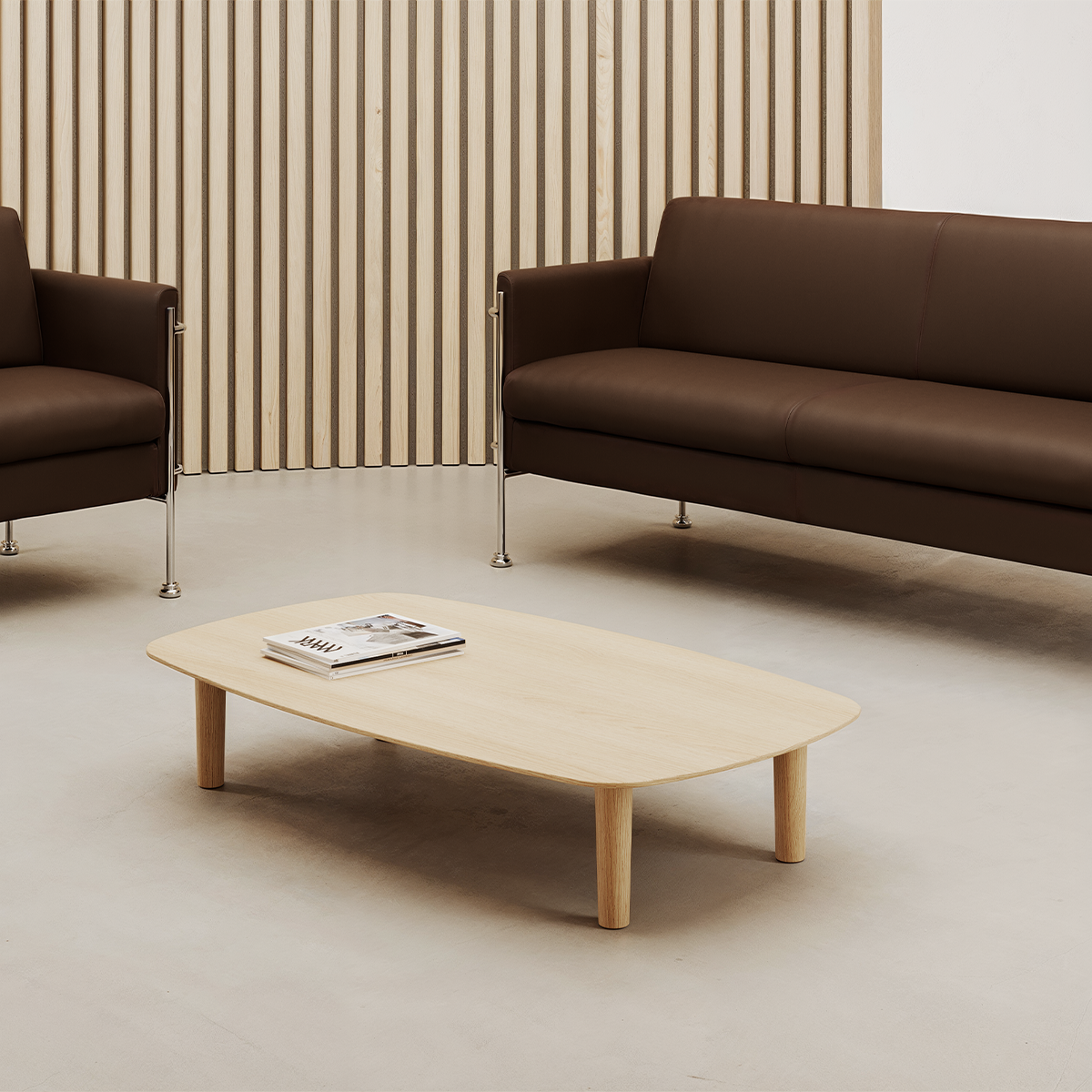
In hospitality environments, even a coffee table can make a decisive contribution to the quality of a space. PLIÉ fits naturally into lounges and reception areas, with soft, sculptural forms that add character without weighing down the composition.
Available in three sizes, PLIÉ allows different arrangements and adapts to intimate or more spacious settings. The curved metal legs give the structure a visually lighter appearance, while the asymmetrical top introduces a more dynamic, distinctive rhythm.
An additional HPL top completes the system, expanding its compositional and functional possibilities. The result is a versatile accessory that works alone or alongside other pieces while retaining a fluid, contemporary identity.
PLIÉ shows how accessories can actively shape the experience: they are not merely surfaces on which to place objects but elements that help define relationships, proportions and atmosphere.
NOVA: a soft, modular presence
In contemporary hospitality environments, seating often needs to meet different requirements without changing its design language. NOVA follows this principle: it can be used as a soft, rounded pouf or transformed into a generously proportioned armchair by adding a backrest.
This hybrid nature makes it possible to create different configurations from the same elements. Several modules can be placed together to form larger compositions, alternating seats with and without backrests to adapt the space for waiting, conversation or breaks.
The contrast between the seat’s soft volume and the more linear backrest gives NOVA a recognisable yet understated identity that fits into different environments without dominating them. The option to customise fabrics also helps define the composition’s tactile and visual character.
[/vc_column_text]
Designing for intensive use: materials, maintenance and longevity
In an entrance hall, lounge or waiting area, furniture is used by many people every day. Seating, coffee tables and surfaces are subject to constant contact, movement, frequent cleaning and minor impacts. Material selection must therefore consider not only appearance but also how each product will be maintained over time.
Easy-to-clean upholstery, a durable structure, replaceable components or recyclable materials can make a tangible difference to furniture’s useful life. They allow individual parts to be serviced without replacing the whole product, make spaces easier to keep tidy and reduce waste and running costs.
In hospitality, durability is not an abstract quality: it means designing furniture that continues to function well, look good and remain easy to maintain even after prolonged, intensive use.
Polypropylene: versatility and practicality in hospitality spaces
In hospitality environments, materials must meet very practical requirements: frequent use, easy maintenance, the ability to coordinate different areas and the need to preserve visual quality over time.
Polypropylene is well suited to these needs because it can be used to create lightweight, versatile components in a range of colours. In collections such as CLOP, for example, the polypropylene shell can remain exposed or be combined with a padded seat or upholstery, expanding customisation options without changing the underlying structure.
This flexibility is particularly useful in contract projects, where the same design language can take different forms and suit reception areas, waiting spaces or shared environments.
Material choice therefore becomes part of the design itself: not simply a technical matter, but a way to balance longevity, day-to-day management and compositional freedom.
Sustainability as a tangible commitment
In hospitality spaces, discussing sustainability means looking beyond individual products and considering how they are designed, manufactured and managed over time.
For Diemme, this approach involves choices concerning materials, processes and production controls. The company operates under an ISO 14001-certified environmental management system, a standard that provides a framework for monitoring and managing the environmental impacts of its manufacturing activities.
ISO 14001: from commitment to environmental management
ISO 14001 certification does not concern a single chair, but the way a company organises and manages its relationship with the environment.
It means working with defined procedures, reviewing processes, identifying areas for improvement and maintaining a system aimed at reducing environmental impacts over time.
In a hospitality project, this adds value by connecting furniture selection to a broader responsibility: not only aesthetic and functional quality, but also attention to how products are made and to their entire life cycle.
3 principles for designing hospitality environments
Designing hospitality spaces means bringing together experience, functionality and day-to-day management. Every environment must feel welcoming while withstanding intensive and varied use over time.
- Design the welcome as an experience
Entrance halls, lobbies, reception areas and lounges are more than passageways. Furniture, comfort and layout help determine how people perceive and experience a space from their first encounter. - Choose flexible furniture for different functions
Armchairs, sofas, seating and accessories must support waiting, conversation, breaks and interaction. Collections such as LOFT, CLOP, PLIÉ and NOVA show how different configurations can create consistent yet adaptable spaces. - Consider longevity, materials and long-term maintenance
In heavily used environments, strength, upkeep and material quality are integral to the design. Versatile solutions, serviceable components and structured manufacturing processes help preserve performance, appearance and functionality over time.
Selection Design: six scenarios, one vision
Welcoming Spaces brings the journey through the six chapters of Selection Design to a close.
From meeting spaces to workplace landscapes, from learning environments to coworking spaces, and finally the home and hospitality, each instalment has shown how design can respond to different needs without losing coherence.
The common thread is a vision of space as an evolving system: environments that change over time, products that adapt to different functions, materials selected for their aesthetic and functional value, and a focus on comfort, durability and the quality of the experience.
This is why Selection Design was created: not simply as a collection of products, but as a tool for understanding contemporary spaces through scenarios, configurations and design possibilities.
Download Selection Design
Download Selection Design to explore the full journey: from meeting spaces to workplaces, from learning to coworking, from the home to hospitality.
A publication for architects, interior designers and professionals seeking not only products but also principles, configurations and useful references for creating spaces that adapt, endure and welcome.
Download Selection Design and discover all the possibilities of Diemme design.
Frequently asked questions about welcoming spaces
How do you design a hotel lobby?
A hotel lobby should be designed around the different ways people spend time there. Arrival, waiting, conversation, brief periods of work and relaxation can coexist through a clear furniture layout and seating suited to different uses.
What furniture should you choose for a hospitality lounge?
For a hospitality lounge, choose furniture that combines comfort, flexibility and aesthetic consistency. Armchairs, sofas, poufs and coffee tables can create intimate or sociable areas, adapting to visitor flows and the length of each stay.
How can you make a waiting area more welcoming?
A waiting area becomes more welcoming when it offers genuine comfort and an intuitive layout. Well-proportioned seating, pleasant materials, practical surfaces and appropriate spacing between elements make waiting a more enjoyable experience.
What features should furniture for hotels and contract spaces have?
Furniture for hotels and contract spaces must be designed for frequent, continuous use. Strength, ease of maintenance, versatility and customisation are particularly important because they affect both the user experience and day-to-day operation.
Why is modularity useful in hospitality spaces?
Modularity is useful in hospitality because it allows layouts to adapt to different needs. Systems such as NOVA make it possible to combine modules with and without backrests and create arrangements suited to the space and its intended use.
What role do accessories play in lounge areas?
Accessories help organise lounge areas and complete the user experience. A piece such as PLIÉ, available in several sizes, provides a practical surface while contributing to the rhythm and identity of the composition.
Why is polypropylene used in contract furniture?
Polypropylene is used in contract furniture because it makes versatile, lightweight components available in different versions. It can be left exposed or combined with padding and upholstery, as in certain CLOP configurations, expanding design possibilities.
Why is durability important in hospitality?
Durability matters in hospitality because furniture is subjected to intensive, repeated use. Designing strong, maintainable products that retain their functionality and appearance over time helps reduce premature replacement and frequent interventions.
What is ISO 14001 certification?
ISO 14001 is an international standard for environmental management systems. For Diemme, it provides a concrete framework for organising, monitoring and continually improving the environmental aspects of its production processes.
How can I learn more about Diemme’s hospitality project?
You can explore Diemme’s hospitality project by downloading Selection Design. The publication brings together the chapter on welcoming spaces and five other scenarios, along with the products and design insights that make up the editorial series.